
YesAstrology's editorial guidelines are the set of standards and processes we use to create accurate, ethical, and reader-focused astrology, tarot, numerology, and spiritual content. They cover topic selection, writing, fact-checking, interpretation, AI use, sourcing, updates, independence, and reader feedback.
Editorial Guidelines
YesAstrology's editorial guidelines ensure every horoscope, tarot reading, and numerology insight is accurate, ethical, and reader-focused. Discover our content creation process, fact-checking standards, and...
On this page
At YesAstrology, our Editorial Guidelines are the backbone of everything we publish. They ensure that every horoscope, tarot reading, numerology profile, and spiritual insight you find on our platform is accurate, ethical, and genuinely helpful. We believe that astrology should be a tool for self-reflection and empowerment, not confusion or fear. That is why we have built a rigorous editorial framework that combines deep astrological knowledge with modern journalistic standards, so you can trust the content you read and apply it meaningfully to your life.
These guidelines govern how we research, write, review, and update our content across all languages and tools on yesastrology.com. They cover everything from the interpretation of planetary transits to the ethical framing of predictive statements. Whether you are a seasoned astrologer or a curious beginner, knowing how our content is created helps you evaluate its value and apply it with confidence. Our editorial team is committed to transparency, and this document is our promise to you: we will always prioritize truth, context, and your well-being over sensationalism.
In the sections below, we walk you through our content creation process, fact-checking standards, use of artificial intelligence, sourcing practices, and how we handle updates and corrections. We also explain our editorial independence and how you can reach us with questions or feedback. By the end, you will understand exactly what goes into every article, tool, and report on YesAstrology, and why you can rely on us as a trusted source for astrological guidance.
Our Editorial Mission
Our editorial mission at YesAstrology is to make astrology, tarot, numerology, and spiritual guidance accessible, accurate, and actionable for everyone. We believe that the cosmos offers a language of patterns and potentials, not fixed destinies. Every piece of content we produce is designed to help you understand yourself and your life more clearly, without falling into deterministic traps or fear-based interpretations. We strive to be the most trusted multilingual platform for spiritual self-discovery.
We achieve this by grounding our content in established astrological principles, such as the meanings of planets, signs, houses, and aspects, while also acknowledging the subjective and symbolic nature of interpretation. Our writers and editors are trained to distinguish between objective astronomical facts, traditional astrological associations, and their own intuitive insights. This layered approach ensures that our content is both educationally sound and personally resonant.
Our mission extends beyond accuracy. We are committed to inclusivity, respecting diverse cultural and spiritual backgrounds, and avoiding harmful stereotypes. We do not use astrology to make medical, financial, or legal claims, and we always remind readers that astrology is a tool for reflection, not a substitute for professional advice. This editorial mission guides every decision we make, from choosing topics to framing predictions.
Why Editorial Guidelines Matter for Astrology Readers
Astrology content is everywhere online, but not all of it is created equal. Without clear editorial guidelines, readers can easily encounter misleading interpretations, fear-mongering predictions, or content that conflates correlation with causation. Our guidelines protect you from these pitfalls. They ensure that every horoscope you read on YesAstrology is based on a consistent, well-reasoned framework, not just a random assortment of keywords.
For example, when we discuss a Mercury retrograde period, we explain what the transit actually means astronomically, how it is traditionally interpreted in astrology, and what common experiences people might have, all while emphasizing that awareness, not panic, is the best response. This structured approach helps you build a reliable understanding of astrology over time, rather than relying on sensational headlines. It also means you can compare our content across different languages and tools with confidence, knowing the same editorial standards apply everywhere.
How We Create Astrology Content
Every piece of content on YesAstrology follows a structured creation process that blends astrological expertise, editorial rigor, and reader-focused clarity. It begins with topic selection, where our editorial team identifies subjects that are timely, relevant, and have genuine educational or reflective value. We prioritize topics that address common questions, clarify misunderstood concepts, or offer practical guidance for personal growth.
Once a topic is chosen, a writer with specialized knowledge in that area drafts the content. Our writers have backgrounds in astrology, tarot, numerology, or related fields, and they are trained to follow our editorial guidelines. The draft must include clear definitions, contextual explanations, and any necessary caveats about the limits of astrological interpretation. For example, a piece on Saturn return will explain the astronomical cycle, its traditional meaning, and the range of possible experiences, while explicitly stating that not everyone feels its effects in the same way.
After the draft is complete, it goes through a multi-stage review process. An editor checks for factual accuracy, logical consistency, alignment with our editorial mission, and readability. They also ensure that the content is free from harmful generalizations, such as assigning negative traits to entire zodiac signs. Only after passing this review is the content published. This process applies to all content types, from blog posts and horoscopes to tool descriptions and premium reports.
The Role of Astrological Frameworks
Our content is built on traditional and modern astrological frameworks, including Western tropical astrology, which is the most widely used system in our target languages. We also incorporate elements of Hellenistic, medieval, and contemporary psychological astrology where relevant. Each article or tool clearly indicates which framework it uses, so you can understand the lens through which the interpretation is made.
For instance, when we discuss house systems, we explain that we primarily use the Placidus system but may reference Whole Sign houses for certain traditional analyses. This transparency allows you to understand the basis of the interpretation and compare it with other systems you may follow. It also helps maintain consistency across our content, ensuring that a reading for your Sun sign is comparable to a reading for your Moon sign.
Balancing Objectivity and Subjectivity
Astrology is both an art and a science of interpretation. Our editorial guidelines recognize this duality. We present objective astronomical data, such as planetary positions and aspects, with precision. But we also acknowledge that the meaning of these configurations is symbolic and open to multiple interpretations. Our writers are encouraged to offer a range of possible meanings, rather than a single definitive prediction, and to invite readers to reflect on their own experiences.
For example, when interpreting a Venus-Mars conjunction, we might describe the traditional association with passionate relationships, but also note that it can manifest as creative energy, financial drive, or inner conflict depending on the individual's chart and life circumstances. This balanced approach helps readers apply the information to their own lives without feeling boxed in by a one-size-fits-all interpretation.

Accuracy and Fact-Checking Standards
Accuracy is non-negotiable at YesAstrology. Our fact-checking process covers three main areas: astronomical data, astrological tradition, and logical consistency. For astronomical data, we rely on established ephemeris sources and cross-check planetary positions, aspect orbs, and house calculations using multiple reliable tools. Any numerical data, such as the exact degree of a transit or the date of a new moon, is verified before publication.
For astrological tradition, our editors verify that interpretations are consistent with recognized sources, such as the works of Ptolemy, William Lilly, or modern authors like Liz Greene and Robert Hand. We do not invent new meanings for planets or signs without clearly attributing them to a specific school of thought. If a writer proposes a novel interpretation, it must be clearly labeled as such and supported by reasoning. This ensures that our content respects the historical and cultural roots of astrology while allowing for thoughtful evolution.
Logical consistency is checked by reviewing whether the interpretation follows from the astrological factors described. For example, if an article discusses a Mars in Aries transit, the interpretation should logically reflect the assertive, initiating qualities of that combination. We also check that predictions are framed as possibilities, not certainties, and that they do not contradict basic astrological principles. Any content that fails these checks is revised or rejected.
How We Handle Astrological Discrepancies
Astrology has many schools of thought, and disagreements are common. For example, the use of different house systems or the interpretation of out-of-sign aspects can lead to varying conclusions. Our editorial guidelines require that we acknowledge these discrepancies when they are relevant to the reader's understanding. We do not present any single interpretation as the only truth.
When a topic involves significant debate, we either present multiple viewpoints or explain why we have chosen one framework over another. For instance, in an article about the Nodes of the Moon, we might explain the difference between the traditional and modern interpretations, and then state which one we are using for the current piece. This transparency builds trust and helps readers navigate the rich diversity of astrological practice.
Astrology Interpretations and Context
Context is everything in astrology. A single planetary placement can mean very different things depending on the sign, house, aspects, and the overall chart. Our editorial guidelines emphasize the importance of providing context for every interpretation. We never give a generic statement like 'Mercury in Gemini makes you talkative' without explaining that this expression is modified by the house, aspects, and the individual's overall chart dynamics.
We also provide context about the limits of astrology. For example, when interpreting a solar return chart, we explain that it offers themes for the year ahead, not a detailed day-by-day prediction. We remind readers that free will and personal circumstances play a major role in how astrological energies manifest. This contextual framing helps readers use astrology as a tool for self-awareness rather than a source of anxiety.
Our interpretations are also culturally and linguistically adapted for each of our target languages. A metaphor that works well in English may not resonate in Spanish or German. Our translators and editors are native speakers who ensure that the meaning is preserved while the phrasing feels natural and relevant to the local audience. This cultural sensitivity is a core part of our editorial guidelines.
The Importance of Disclaimers
Every piece of content on YesAstrology includes appropriate disclaimers. We clearly state that astrology is not a science, that it should not be used as a substitute for professional medical, financial, or legal advice, and that all interpretations are for entertainment and personal reflection purposes. These disclaimers are not just legal formalities; they are ethical commitments to our readers.
We also include specific disclaimers for sensitive topics. For example, when discussing challenging transits like Saturn square Saturn or Pluto opposite Pluto, we emphasize that these periods can be difficult but are also opportunities for growth. We avoid language that could induce fear or fatalism, and we encourage readers to seek support from trusted professionals if they are struggling. This approach respects the power of astrological symbolism while prioritizing the reader's mental and emotional well-being.

Use of AI and Human Review
YesAstrology uses artificial intelligence as a tool to enhance our content creation process, but it never replaces human judgment. Our AI systems assist with initial research, data aggregation, language translation, and drafting suggestions. However, every piece of content that reaches you has been reviewed, edited, and approved by a human editor with expertise in astrology or a related field.
Our AI Usage Policy, which you can read in detail on our website, outlines exactly how we use AI. We do not publish AI-generated content without human oversight. The AI helps us work more efficiently, especially in producing consistent translations across multiple languages, but the final responsibility for accuracy, tone, and ethical framing rests with our editorial team. This hybrid approach allows us to scale our content while maintaining the quality and trust that our readers expect.
We also use AI to identify potential errors, inconsistencies, or areas where additional context might be needed. For example, an AI tool might flag a sentence that could be interpreted as a definitive prediction, prompting the editor to add a clarifying caveat. This collaborative process between human and machine ensures that our content is both thorough and carefully considered.
Transparency About AI Involvement
We believe in being transparent with our readers about how our content is produced. Our AI Usage Policy page explains the specific roles AI plays in our workflow, as well as the safeguards we have in place to prevent errors or biases. We also disclose when a tool or report uses AI-generated interpretations, always with the note that human editors have reviewed the output.
This transparency is part of our broader commitment to editorial integrity. We want you to know exactly what you are reading and how it was created. If you have questions about a specific piece of content and its AI involvement, you can contact our editorial team for clarification. We view AI as a collaborator, not a replacement, and we are committed to using it responsibly.
Sources and Reference Materials
Our content is grounded in a carefully curated set of reference materials that represent the breadth and depth of astrological tradition. We draw from classical texts, such as Ptolemy's Tetrabiblos and the works of medieval astrologers like Guido Bonatti, as well as modern authorities like Dane Rudhyar, Stephen Arroyo, and Liz Greene. For numerology and tarot, we reference standard works by authors like A.E. Waite and Hans Decoz.
We also consult contemporary academic research on astrology, where available, to ensure our content is informed by the latest scholarly perspectives. This includes studies on the history of astrology, its cultural variations, and psychological studies of belief and self-perception. While astrology itself is not a science, understanding its historical and cultural context helps us present it more accurately and respectfully.
All sources are evaluated for credibility and relevance. We prioritize works that are widely recognized within the astrological community and that have stood the test of time. When we cite a specific author or text, we do so to support a particular interpretation or to provide a point of comparison. We do not rely on anonymous online sources or unverified claims.
How We Evaluate Astrological Sources
Not all astrological sources are equally reliable. Our editorial team uses a set of criteria to evaluate potential references: the author's credentials and reputation, the consistency of the work with established astrological principles, the presence of clear reasoning and evidence, and the absence of harmful or discriminatory content. We also consider the diversity of perspectives, ensuring that we are not overly reliant on a single tradition or author.
For example, when writing about the fixed stars, we might consult both traditional sources like Ptolemy and modern works by Bernadette Brady, comparing their interpretations and noting differences. This approach allows us to present a richer, more nuanced view to our readers. It also helps us avoid perpetuating outdated or culturally insensitive interpretations.
Content Updates and Revisions
Astrology is a living tradition, and our content evolves with it. We regularly review and update our articles, horoscopes, and tool descriptions to ensure they remain accurate, relevant, and aligned with our editorial guidelines. This is especially important for time-sensitive content, such as monthly horoscopes or transit forecasts, which are updated on a regular schedule.
Our revision process involves checking for outdated astronomical data, such as the current positions of slow-moving planets, as well as reviewing interpretations for consistency with evolving astrological thought. We also update content to reflect new research, reader feedback, or changes in our editorial standards. Each piece of content includes a 'last updated' date so you can see how recent the information is.
When we make significant revisions, we note them in a changelog that is visible to readers. This transparency allows you to track how our understanding of a topic has developed over time. It also holds us accountable to our commitment to continuous improvement. If you notice something that seems outdated or incorrect, please let us know through our feedback channels.
How We Prioritize Updates
Not all content needs to be updated at the same frequency. High-traffic articles, time-sensitive forecasts, and content that directly impacts user decisions are prioritized for regular review. Evergreen content, such as explanations of zodiac signs or planetary meanings, is reviewed on a longer cycle, typically annually or biannually.
We also prioritize updates based on reader feedback. If multiple readers point out an error or a confusing passage, we fast-track that content for revision. Our goal is to maintain a library of content that you can trust to be current and accurate, no matter when you access it. The 'last updated' date on each page gives you the information you need to assess its timeliness.
Editorial Independence
YesAstrology maintains strict editorial independence. Our content is not influenced by advertisers, sponsors, or external partners. We do not accept payment for positive coverage, and we do not allow commercial interests to shape our interpretations or recommendations. This independence is essential to maintaining your trust.
Our editorial team has full authority over what we publish and how we present it. If a business partner or advertiser requests changes to content, those requests are evaluated solely on editorial merit, not financial considerations. We clearly label any sponsored content or affiliate links, and such content is held to the same editorial standards as all other content on the site.
We also maintain independence from any single astrological school or organization. Our content reflects a broad spectrum of astrological thought, and we are free to critique or question any interpretation, including those that are widely popular. This intellectual freedom allows us to serve our readers with honest, unbiased information.
How We Handle Conflicts of Interest
If any member of our editorial team has a personal or financial interest in a topic they are writing about, they are required to disclose it. The content is then reviewed by another editor to ensure objectivity. We also avoid publishing content that could be seen as promoting a specific product, service, or astrologer without clear disclosure.
For example, if we review an astrology app or book, we will note whether we received a free copy or any compensation. Our reviews are always honest and based on the merits of the product. This policy ensures that our recommendations are driven by what is genuinely useful to our readers, not by hidden incentives.

Reader Feedback and Corrections
Your feedback is vital to the quality of our content. We actively encourage readers to report errors, unclear passages, or suggestions for improvement. Every piece of content includes a feedback link or a comment section where you can share your thoughts. Our editorial team reviews all feedback and takes it seriously.
When a reader points out a factual error, we investigate immediately. If the error is confirmed, we correct it and update the content. We also add a note acknowledging the correction, so other readers can see that the issue has been addressed. For significant errors, we may publish a separate clarification or apology.
We also value feedback on the clarity and usefulness of our interpretations. If a passage is confusing or seems to contradict another piece of content, we want to know. This helps us improve our editorial guidelines and training for writers. Reader feedback is one of the most important tools we have for maintaining high standards.
How to Submit Feedback
You can submit feedback through the contact form on our website, by emailing our editorial team, or by using the feedback link on any page. Please include the URL of the content you are referring to and a clear description of your concern. We aim to respond to all feedback within five business days.
We also have a dedicated FAQ page that addresses common questions about our content and editorial process. If you have a general question, you may find the answer there. But if you have a specific concern about a particular article or tool, please reach out directly. We appreciate your help in making YesAstrology a better resource for everyone.
Contact the Editorial Team
If you have questions about our editorial guidelines, want to report an error, or wish to discuss a potential collaboration, the editorial team at YesAstrology is here to help. You can reach us through the contact page on our website. We are committed to responding promptly and thoughtfully to all inquiries.
Our editorial team is composed of experienced astrologers, writers, and editors who are passionate about making astrology accessible and trustworthy. We welcome dialogue with our readers, whether you are a beginner seeking clarification or a professional astrologer with a different perspective. Constructive conversations help us refine our approach and serve our community better.
Please note that we cannot provide personal astrological consultations through this channel. If you are looking for a personalized reading, we encourage you to explore our premium reports or consult a professional astrologer. For all other matters, we look forward to hearing from you.
Frequently asked questions
We ensure accuracy through a multi-stage process that includes verifying astronomical data with reliable ephemeris sources, cross-checking interpretations against recognized astrological authorities, and reviewing for logical consistency. Every piece of content is reviewed by a human editor before publication.
YesAstrology uses AI as a tool to assist with research, data aggregation, translation, and drafting. However, all content is reviewed and approved by a human editor with expertise in astrology or a related field. We are transparent about our AI use in our AI Usage Policy.
No, YesAstrology maintains strict editorial independence. Our content is not influenced by advertisers, sponsors, or external partners. Sponsored content is clearly labeled and held to the same editorial standards. Our editorial team has full authority over all published content.
We use a curated set of reference materials, including classical texts by Ptolemy and Guido Bonatti, modern works by Liz Greene and Stephen Arroyo, and standard tarot and numerology references. Sources are evaluated for credibility, consistency, and cultural sensitivity.
We acknowledge different schools of thought when relevant, such as house systems or the interpretation of out-of-sign aspects. We either present multiple viewpoints or explain our chosen framework. We do not present any single interpretation as the only truth.
No, the editorial team does not provide personal consultations. For personalized readings, we offer premium reports on our website. Our content is designed for self-reflection and education, not as a substitute for professional advice.
Editorial Guidelines summarizes the main themes, context and result signals that matter most for interpretation.
Share this page
Related content
 Page
PageAbout
Discover the story behind YesAstrology. We make astrology clear, accessible, and practical for self-discovery. Learn about our values, tools, and vision.
Read more Page
PageContact
Reach out to the YesAstrology team for support with astrology tools, reports, account help, or general inquiries. We're here to help you.
Read more Page
PageAcceptable Use Policy
Learn the rules for using YesAstrology. This Acceptable Use Policy covers prohibited activities, account misuse, content standards, and enforcement actions.
Read more
Popular calculators
 Calculator
Astrocartography Chart Calculator (Astro Map) Calculator
Generate your free astrocartography chart to see how locations worldwide influence your natal chart. Calculate your astrology chart online for instant.
Open calculator- Astrocartography City Finder CalculatorCalculator
Astrocartography City Finder Calculator
Rank 2–5 selected cities by the closest planetary MC/IC meridian and compare their relocated chart angles and house assignments.
Open calculator  Calculator
Birth Chart Calculator (Natal Chart) Calculator
Calculate your Free Birth Chart Calculator (Natal Chart) online with our free interactive astrology tool. Explore accurate natal aspects, planetary placements.
Open calculator Calculator
Birth Chart Calculator Without Accurate Time Calculator
Get your free birth chart without an exact time. Instant natal chart outputs and practical planetary analysis, ready in seconds. Calculate your astrology chart.
Open calculator Calculator
Birth Time Rectification Calculator
Pin down your exact birth time with our rectification calculator. Get instant natal chart outputs and practical planetary analysis. Calculate your astrology.
Open calculator Calculator
Composite Relationship Chart Calculator
Enter two birth details and get an instant composite chart. See planetary aspects, house placements, and synastry insights for free. Calculate your astrology.
Open calculator
Featured Premium Reports
 ReportSave 41%
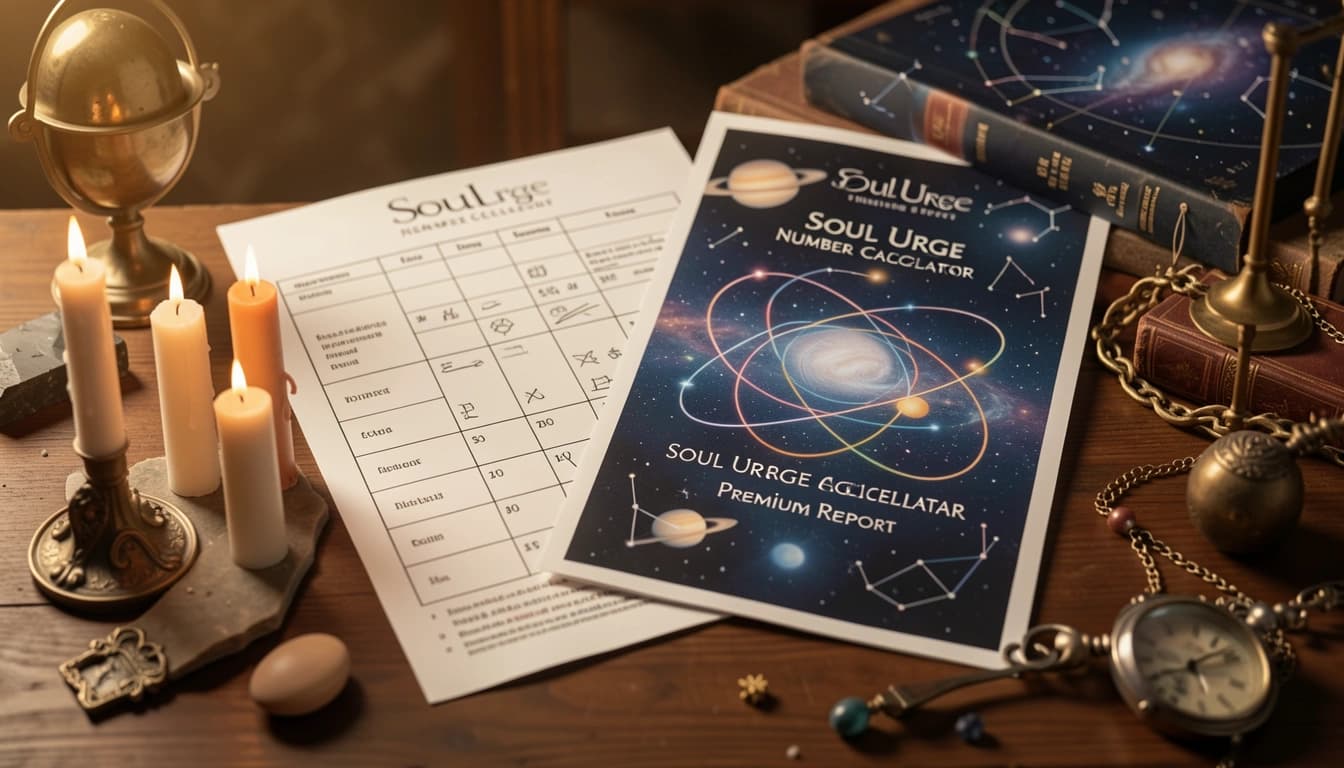
Soul Urge Number Premium Analysis Report
Order your personalized Soul Urge Number Premium Analysis Report. Comprehensive Soul Urge Number from the vowels in your name and receive a full premium
$2.90$4.90View report ReportSave 41%
Personality Number Premium Analysis Report
Order your personalized Personality Number Premium Analysis Report. Comprehensive Personality Number from the consonants in your name and explore what it
$2.90$4.90View report ReportSave 34%
Numerology Compatibility Premium Analysis Report
Order your complete Numerology Compatibility Premium Analysis Report. Compare Life Path and core numerology numbers between two people for compatibility
$9.90$14.90View report
Astrology Guides
 Blog
BlogWhy You Feel Different After Moving: Astrocartography and Relocation Astrology
Discover why moving changes how you feel. Learn how astrocartography and relocation astrology map planetary lines to your new home, identity, and life...
Read more Blog
BlogEmpty Houses in Astrology: Do They Mean Something Is Missing From Your Life?
Empty houses in astrology do not mean something is missing. Learn how to find them, read their ruling planets, and understand what a blank house truly says.
Read more Blog
BlogWhat Your Birth Chart Says About Your Career Success
Discover how your birth chart reveals career success through the 10th house, 2nd house, planetary dignities, and vocational indicators. A complete guide.
Read more