On this page
What Is a Stellium in Astrology? A stellium is a powerful concentration of planetary energy in your birth chart. It occurs when three or more planets gather within a single zodiac sign or house, effectively creating a cluster of focused intensity. This setup amplifies the themes of that sign and house, making that area of life a dominant force in your personality and experiences.
If you have a stellium, you'll often feel a strong pull toward the affairs of that house and express the sign's traits with unusual consistency. Stelliums are not rare, but they are significant because they represent a 'pack' of energies working together. Understanding your stellium can reveal where your life's greatest focus lies.
In the sections that follow, you'll learn exactly what qualifies as a stellium, how to identify one in your chart, how to interpret the planets involved, and how to avoid the most common misinterpretations. Whether you're a beginner or a seasoned astrologer, this guide will give you a complete framework for reading stelliums.
For further reading, you can also explore Home.
What Exactly Qualifies as a Stellium in Astrology?
A stellium is traditionally defined as three or more planets situated within the same zodiac sign or the same astrological house. However, not every cluster is automatically a stellium. Most astrologers require the planets to be within an orb of 8 to 10 degrees of each other, ensuring they function as a tight-knit group rather than a loose scattering. The closer the planets, the more intense the stellium.
The qualifying planets include the Sun, Moon, Mercury, Venus, Mars, Jupiter, Saturn, Uranus, Neptune, and Pluto. Some astrologers exclude the Moon's Nodes or asteroids unless they are considered by the practitioner. Chiron is sometimes included, but mainstream practice keeps the count to the ten classical and modern planets.
Stelliums can form in any sign or house, but they are most potent when they fall in angles (1st, 4th, 7th, 10th houses) or in signs where the planets are dignified. A stellium in the 10th house, for example, often indicates a strong career focus and public recognition.
The Difference Between a Sign-Based and House-Based Stellium
A sign-based stellium means three or more planets occupy the same zodiac sign, regardless of which house they fall into. This emphasizes the archetypal energy of that sign – for instance, a Leo stellium brings creativity, drama, and leadership. A house-based stellium means the planets all fall within the same house, even if they are in different signs (though this is less common and usually involves intercepted signs).
When both conditions align – same sign and same house – the stellium is at its most powerful. The house shows where life becomes concentrated, while the sign shows how that energy expresses itself. For example, a stellium in Aries in the 6th house would bring a competitive, pioneering approach to daily work and health routines.
How Many Planets Are Needed to Form a Stellium?
The most widely accepted rule is that a stellium requires at least three planets. This distinguishes it from a conjunction, which involves only two planets. Some traditional astrologers, particularly those working with Hellenistic techniques, argue that four or more planets are needed because three can be interpreted as a group of conjunctions rather than a unified cluster.
Modern astrological consensus leans toward three, especially in psychological and evolutionary astrology. A three-planet stellium is common in many birth charts and still carries significant weight. A four-planet stellium is more intense, and five or more is exceptionally rare and powerful.
The count includes the Sun and Moon (see next section) and usually excludes minor bodies unless the astrologer chooses to include them. When counting, look for planets within a contiguous orb range – if the outermost planet is more than 10 degrees from the innermost, some astrologers may consider it a weak or sprawling stellium.
Stellium by Sign vs. Stellium by House
Both interpretations are valid, and they often overlap. A stellium by sign emphasizes the zodiacal personality – the core drives, talents, and challenges of that sign. A stellium by house focuses on the life domain – career, relationships, home, spirituality, etc. When the two align, the message is crystal clear.
However, they can conflict. For example, you might have three planets in Gemini (sign stellium) but spread across the 11th and 12th houses. In that case, the Gemini energy is pervasive, but it manifests in both social networks (11th) and solitude or subconscious patterns (12th). The house stellium might be absent, but the sign stellium still operates.
Conversely, you can have a house stellium without a sign stellium if planets fall in the same house but in different signs. This is rarer and often indicates that multiple energies converge on one life area, requiring you to integrate different archetypes in that sphere.
Which One Is More Important?
Most astrologers consider the house stellium more practically significant because it directly indicates the area of life where events and focus cluster. The sign shows the style, but the house shows the stage. For predictive work, transits to the house cusp or planets in the house often activate the stellium themes more directly than transits to the sign alone.
That said, sign-based stelliums can reveal deep psychological patterns. A stellium in Pisces, even if spread across houses, suggests a soul that feels everything deeply and may struggle with boundaries. In practice, examine both and see which resonates more with the native's experience.
Do the Sun and Moon Count in a Stellium?
Yes, absolutely. The Sun and Moon are considered personal planets and carry immense weight in a stellium. If your Sun, Moon, and Mercury are all in Virgo, that is a clear three-planet stellium. The Sun and Moon represent core identity and emotional nature, so their inclusion deepens the stellium's impact.
Some astrologers who use the term 'stellium' only for faster-moving planets (Sun through Mars) might be more hesitant, but modern practice accepts all planets. The Sun and Moon are particularly significant because they are the two luminaries and are often in different signs from each other. When they do align in the same sign and join a third planet, the stellium becomes a major life theme.
If the Sun and Moon are in the same sign but not within a tight orb of other planets, they form a 'New Moon' or 'Full Moon' configuration rather than a stellium. For a stellium, they must be part of a group of three or more planets within the orb range.
Do Outer Planets Count as Part of a Stellium?
Uranus, Neptune, and Pluto are generational planets that move slowly and spend years in the same sign. Because of this, many people born in the same decade share the same outer planet placements. If you include them, entire generations would have stelliums, which dilutes the meaning.
Most astrologers count outer planets in a stellium only if they are within a tight orb (3-5 degrees) of the personal planets and are in the same sign or house. A stellium that includes Uranus, Neptune, or Pluto usually indicates that the native is a trailblazer or deeply connected to collective themes in that life area. However, if the outer planet is isolated from personal planets, it may not function as a true cluster.
For practical interpretation, focus on the personal planets first. If an outer planet joins a group of three personal planets, that stellium gains a generational flavor but still operates on a personal level. If the stellium consists only of outer planets (e.g., Uranus, Neptune, Pluto in Capricorn), it describes a generational signature rather than a personal one.
When to Include Outer Planets
Include outer planets if they are within 5 degrees of a personal planet in the cluster and if they fall in the same sign or house. For example, Uranus at 2° Scorpio conjunct your Sun at 5° Scorpio and Mercury at 8° Scorpio creates a three-planet stellium with Uranus. This suggests a person who expresses individuality through communication and identity in abrupt, innovative ways.
Exclude outer planets if they are more than 8 degrees from the group or if they are in a different sign. Many astrologers recommend reading the stellium with and without the outer planet to see which interpretation fits the native's life more accurately.
How Close Do the Planets Need to Be?
Orb tolerance is a critical factor. For a stellium, most astrologers use an orb of 8 to 10 degrees between the outermost planets. This means if the first planet is at 0° Aries and the last is at 9° Aries, all planets fall within a 9-degree range and qualify. Some strict astrologers prefer 6 degrees, especially for stelliums involving the luminaries.
Conjunctions within the stellium can have tighter orbs (1-3 degrees), but the overall group can be looser. The more spread out the planets, the weaker the sense of 'pack' energy. A stellium with planets between 0° and 5° is extremely intense; one with planets between 0° and 10° is still potent but allows more room for individual planetary expression.
House-based stelliums don't rely on degree-based orbs regarding house boundaries – if planets are in the same house, they count, regardless of degree spread. However, if they are in the same house but very far apart (e.g., 20 degrees), they may not function as a tight cluster psychologically, so consider the orb across the house as well.
Orb Guidelines for Different Types of Stelliums
- Personal Planet Stellium: 8-10 degree orb maximum. Example: Sun, Mercury, Venus in Leo at 3°, 7°, 11° – they are within 8 degrees (11-3=8) and qualify.
- Including Outer Planets: 5-6 degree orb for outer planets to be considered integrated.
- Luminaries Only: If only Sun and Moon are involved, they need a third planet to form a stellium, but the orb between Sun and Moon can be up to 10 degrees.
- House Stellium: No specific degree limit, but tighter degrees within the house strengthen the effect.

How to Identify a Stellium in Your Birth Chart
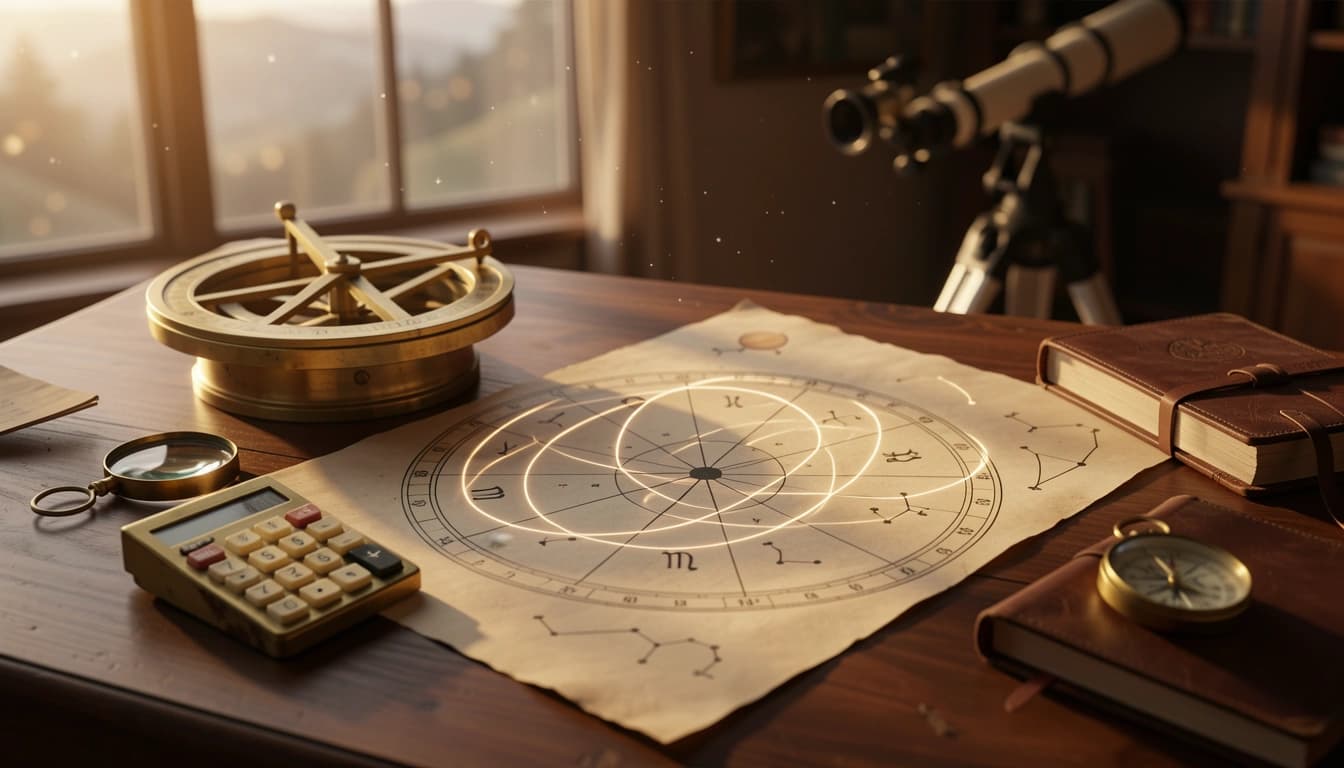
To find a stellium, you first need a detailed birth chart. You can use a free natal chart calculator – check your placements for any sign or house where three or more planets appear. Write down the sign and degree of each planet. If three planets are within 10 degrees of each other in the same sign, you have a sign-based stellium. If they are in the same house, you have a house-based stellium.
Look especially at the Sun, Moon, and personal planets (Mercury, Venus, Mars) because they create the most noticeable impact. Outer planets like Jupiter and Saturn can also form stelliums but with a slower, more structural expression. Don't forget to check intercepted houses – sometimes planets in two signs but in the same house due to interception can still form a house stellium.
If you find more than one stellium, prioritize the one with the most personal planets or the one in an angular house. A stellium in the 1st house, for example, will be more obvious than one in the 12th, though the latter is equally profound.
Step-by-Step Checklist
- Generate your birth chart with accurate birth time, date, and location.
- List all planets by sign, degree, and house.
- Sort by sign. Identify any sign containing three or more planets.
- Check the degree range: if the spread is 10 degrees or less, it's a sign stellium.
- Sort by house. Identify any house containing three or more planets – this is a house stellium, regardless of degrees.
- Note the stellium's sign, house, and planetary members.
For further reading, you can also explore Tools.
How to Interpret the Planets Within a Stellium
Each planet in the stellium brings its distinct energy, but they merge into a single loud voice. Start by identifying the 'ruler' of the stellium – the planet with the most essential dignity (domicile, exaltation, triplicity) or the one that is most aspected by other chart factors. That planet often becomes the leader of the pack.
Read each planet's archetype: Sun (identity, ego), Moon (emotions, habits), Mercury (mind, communication), Venus (love, values), Mars (action, desire), Jupiter (expansion, luck), Saturn (structure, lessons), Uranus (innovation, rebellion), Neptune (illusion, spirituality), Pluto (transformation, power). Then consider how they combine. For example, a stellium with Sun, Mercury, and Mars in Aries suggests a person with strong initiative, quick thinking, and assertive communication – but also potential for impulsiveness.
Look at aspects from the stellium's planets to other chart points. A stellium that is heavily aspected (e.g., trined by Jupiter) is integrated smoothly; one that is afflicted (e.g., square Saturn) creates tension that must be worked through.
Example Interpretation: Stellium in Taurus in the 2nd House
A stellium in Taurus in the 2nd house includes Venus (natural ruler of Taurus), the Moon, and Saturn. The person has deep emotional security needs tied to finances and material stability (Moon), a cautious approach to spending (Saturn), and strong aesthetic values (Venus). The stellium ruler is Venus, which also rules the 2nd house naturally, reinforcing the themes of money, self-worth, and possessions. This person may build wealth slowly but with great persistence.
How the Sign and House Change a Stellium’s Meaning
The zodiac sign provides the raw material – the elemental nature and mode. Fire signs (Aries, Leo, Sagittarius) make stelliums dynamic, passionate, and action-oriented. Earth signs (Taurus, Virgo, Capricorn) make them practical, patient, and materially focused. Air signs (Gemini, Libra, Aquarius) make them intellectual, social, and communicative. Water signs (Cancer, Scorpio, Pisces) make them emotional, intuitive, and protective.
The house reveals the arena of life. A stellium in the 4th house emphasizes home, family, and roots. In the 7th house, it centers on partnerships and relationships. In the 10th house, career and public reputation are paramount. The house modifies how the sign expresses – a Leo stellium in the 8th house (shared resources, transformation) will be less about personal spotlight and more about power dynamics and financial sharing.
Always interpret the sign and house together. For instance, a Virgo stellium in the 6th house doubles down on the sign's natural themes of health, work, and service, making it a very potent placement for those areas.
How Stelliums Influence Major Life Themes
Stelliums create a single-minded focus that can lead to mastery in that area of life, but also to imbalance if other areas are neglected. For example, a stellium in the 10th house can drive someone to achieve great career success, but may strain relationships or health. A stellium in the 5th house can produce a highly creative individual who struggles with routine responsibilities.
Life themes often repeat: the native may encounter situations that reinforce the stellium's energy. A 7th house stellium might attract intense relationship experiences, both partnerships and legal contracts. A 12th house stellium may lead to profound spiritual insights but also periods of isolation or hidden struggles.
Stelliums also indicate where transits will have the most impact. When a planet transits over the degree of a stellium, it activates all the planets within it, creating a period of heightened activity and growth. Saturn returns or Jupiter transits through the stellium's sign can be pivotal life chapters.
Stellium in the 1st House: The Charismatic Leader
With three or more planets in the 1st house, the native's personality is exceptionally strong. They are often perceived as intense, self-expressive, and highly individual. The 1st house rules the self, appearance, and approach to life. A stellium here can indicate a person who feels driven to be known, to lead, and to assert their identity. Famous examples include actors and politicians with multiple planets in the 1st house.
Stellium in the 4th House: The Family Anchor
A 4th house stellium emphasizes roots, ancestry, home, and private life. The native may feel a strong responsibility toward family or may experience major transformations through domestic life. Privacy is important, and they may be deeply nostalgic. This stellium often manifests in careers related to real estate, history, or caregiving.
How Astrologers Determine the Strength of a Stellium
Not all stelliums are created equal. Strength is determined by several factors: the number of planets (three is moderate, six is extremely strong), the nature of the planets (personal planets weigh more than outer), the sign's dignity (ruling or exalted planets amplify), the house (angular houses are strongest), and aspects from other chart points. A stellium in fall or detriment can still be powerful but more challenging.
Essential dignity plays a role: a Jupiter in Cancer stellium is at home and therefore expresses positively; a Mars in Libra stellium is in detriment and may create friction. Also consider if the stellium is combust (if the Sun is too close to another planet, weakening it) or if there are any retrograde planets, which can internalize the energy.
Angular strength is crucial: a stellium on an angle (Ascendant, IC, Descendant, MC) or in an angular house (1, 4, 7, 10) will be more visible in the native's life. A stellium in a succedent or cadent house is still meaningful but less dominant.
Factors That Weaken a Stellium
- Wide orb beyond 10 degrees causes diffusion.
- Including only outer planets without personal planets.
- Stellium in a cadent house (3, 6, 9, 12) especially if not supported by aspects.
- Planets in detriment or fall (e.g., Venus in Scorpio, Moon in Capricorn).
- Stellium poorly aspected by malefics (Saturn, Mars) causing blockage.
Stellium vs. Conjunction: What Is the Difference?
A conjunction occurs when two planets are within a few degrees of each other (usually 0-8 degrees). A stellium, by contrast, involves three or more planets. In practice, a stellium often contains multiple conjunctions within it – for example, a three-planet stellium contains three possible conjunctions (A-B, B-C, A-C). But the whole is greater than the sum of its parts.
The key difference is complexity. A conjunction combines two energies into a single fused expression. A stellium is a group dynamic where each planet must negotiate with the others. A stellium can feel like a committee meeting in your chart, whereas a conjunction is more like a duo. Stelliums also tend to dominate the chart more because they occupy more real estate.
In terms of interpretation, a conjunction can be handled by blending two archetypes. A stellium requires prioritizing which planet is most prominent (the 'stellium ruler') and understanding the hierarchical relationships within the group.
Can a Stellium Include a Conjunction?
Yes, always. If three planets are within 8 degrees of each other, then each pair is within conjunction orb, so every possible pairing is a conjunction. However, some astrologers reserve the term 'stellium' for three or more and use 'conjunction' only for two. So the two terms are not mutually exclusive – a stellium is a set of conjunctions.
For example, Sun at 5° Aries, Mercury at 7° Aries, Venus at 9° Aries: Sun-Mercury is a conjunction (2° orb), Mercury-Venus (2°), Sun-Venus (4°). All three are conjunctions, but together they form a stellium.
How to Read a Stellium Without Oversimplifying Your Chart
The biggest mistake is to isolate the stellium and ignore the rest of the chart. A stellium is a major clue, but it is not the whole story. Always consider the other planets and their aspects. For example, a 10th house stellium may promise career success, but if Saturn is in the 2nd house opposite the stellium, financial struggles may temper that success.
Also consider the house rulers. The planets in the stellium rule other houses in your chart. Their position in the stellium
For further reading, you can also explore Blog.