On this page
Your birth chart is a celestial snapshot of the sky at the exact moment you were born. Also called a natal chart, it maps where every planet, the Sun, and the Moon were positioned relative to Earth, divided into twelve astrological houses. A Free Birth Chart Calculator (Natal Chart) turns your birth date, time, and location into a personalized cosmic blueprint that reveals your core personality, emotional patterns, strengths, challenges, and life themes.
Unlike your Sun sign alone, which represents your ego and basic identity, the full natal chart shows the interplay of all planetary energies. Your Moon sign governs your emotional world, your Rising sign shapes how others perceive you, and each planet adds a distinct layer of motivation and behavior. The houses indicate where in life these energies express themselves, while aspects reveal how the planets relate to each other, creating harmony or tension.
This guide walks you through generating your chart, interpreting each component, and understanding the deeper patterns that make your astrological profile unique. Whether you are new to astrology or looking to deepen your practice, the Free Birth Chart Calculator (Natal Chart) provides the foundation for meaningful self-discovery.
For further reading, you can also explore Chart Calculators — Natal, Transit & Return Charts.
What Is a Birth Chart and What Does It Reveal?
A birth chart, or natal chart, is a circular map divided into twelve segments called houses, each representing a different area of life such as career, relationships, home, and spirituality. The planets, Sun, and Moon are placed in specific signs and houses based on their positions at your birth time. This arrangement creates a unique fingerprint that no one else shares.
The chart reveals your innate temperament, emotional responses, communication style, love language, career inclinations, and even karmic lessons. It does not predict fixed events but shows tendencies, timing cycles, and the energetic backdrop against which you make choices. For example, Mars in Aries in the 10th house suggests a driven, assertive approach to career, while Venus in Pisces in the 7th house indicates a deeply romantic and idealistic partnership style.
Beyond personality, the birth chart highlights your strengths and potential blind spots. A challenging aspect between Saturn and the Moon may indicate emotional restraint or a need for security, while a trine between Jupiter and Mercury can point to natural optimism and intellectual breadth. The Free Birth Chart Calculator (Natal Chart) makes these insights accessible by generating a clear visual chart with all placements and aspects labeled.
How Is a Natal Chart Structured?
The natal chart consists of three main layers: the zodiac signs (the backdrop), the planets (the actors), and the houses (the stages). The outer ring shows the twelve signs of the zodiac, each spanning 30 degrees. Inside, the planets are plotted at specific degrees within those signs. The innermost ring divides the chart into twelve houses, which are calculated based on your exact birth time and location. The angles, including the Ascendant (Rising sign), Midheaven (MC), Descendant, and Imum Coeli (IC), form the four cardinal points that anchor the chart.
Generate Your Free Birth Chart Online
To generate your free birth chart using YesAstrology's Free Birth Chart Calculator (Natal Chart), you need three pieces of information: your birth date, your exact birth time, and your birth location. The tool uses this data to calculate the precise positions of the planets and the house cusps according to your local time zone and coordinates.
The process is straightforward. Enter your birth details into the calculator, and within seconds you receive a full natal chart image plus a detailed breakdown of each placement, house, and aspect. The chart displays the Sun, Moon, Mercury, Venus, Mars, Jupiter, Saturn, Uranus, Neptune, Pluto, the North Node, Chiron, and Lilith, along with the Ascendant and Midheaven. You can also generate charts for friends, family, or clients as long as you have their birth data.
This tool uses the tropical zodiac system, which is the standard for Western astrology. It also applies the Placidus house system by default, though you can switch to Whole Sign houses if you prefer. The calculator is free, requires no registration, and works on both desktop and mobile browsers.
What Data Do You Need for an Accurate Chart?
For the most accurate birth chart, you need: date of birth (month, day, year), exact time of birth (hour and minute, including AM/PM), and city or town of birth. If you do not know your birth time, you can still generate a chart, but the house cusps and Rising sign will be approximate. The tool offers a 'Without Accurate Time' option that sets the birth time to noon and notes the uncertainty. For best results, check your birth certificate or ask a parent for the exact time.

How Does a Birth Chart Calculator Work?
A birth chart calculator uses astronomical algorithms to compute the positions of the Sun, Moon, and planets relative to Earth at a given moment in history. It references ephemeris data, which is a table of celestial coordinates calculated for each day. The calculator then applies your local time zone, daylight saving time adjustments, and geographic coordinates to determine the exact angles of the houses and the Ascendant.
The calculation involves several steps. First, it converts your local birth time to Universal Time (UT) and then to sidereal time, which is based on Earth's rotation relative to the fixed stars. Using sidereal time, it calculates the Midheaven (MC) and Ascendant. Next, it determines the house cusps using the chosen house system, such as Placidus or Whole Sign. Finally, it computes the zodiac positions of each planet and the angles between them, known as aspects.
The Free Birth Chart Calculator (Natal Chart) on YesAstrology performs all these calculations server-side using trusted astronomical libraries. The results are accurate within a few arcminutes, which is sufficient for interpretative astrology. The tool also highlights key aspects like conjunctions, sextiles, squares, trines, and oppositions, along with their orbs.
What House System Does the Calculator Use?
YesAstrology's birth chart calculator defaults to the Placidus house system, which is the most widely used in Western astrology. Placidus divides houses based on time-based arcs, making house sizes unequal depending on your latitude. You can also select the Whole Sign Houses system, where each house corresponds to an entire zodiac sign, starting from the Ascendant. The calculator recalculates house cusps instantly when you switch systems.
How to Read Your Natal Chart Step by Step
Reading a natal chart can feel overwhelming at first, but breaking it down into steps makes it manageable. Start by identifying your Big Three: the Sun sign, Moon sign, and Rising sign (Ascendant). These three placements form the core of your personality. The Sun represents your ego and conscious identity, the Moon your emotions and instincts, and the Rising your outward personality and first impressions.
Next, look at the planets. Each planet rules a specific area of life: Mercury rules communication, Venus rules love and values, Mars rules action and drive, Jupiter rules expansion and luck, Saturn rules discipline and structure, and the outer planets Uranus, Neptune, and Pluto influence generational themes. Note which sign and house each planet occupies, as this tells you how that energy expresses and where it focuses.
Then examine the houses. The house of your Sun shows where you shine and seek recognition. The house of your Moon reveals where you find emotional security. The house of your Ascendant ruler (the planet that rules your Rising sign) is especially important. Finally, look at the aspects, which are the angles between planets. Conjunctions (0°) blend energies, sextiles (60°) and trines (120°) indicate ease, squares (90°) and oppositions (180°) indicate tension and growth areas.
What Is the Most Important Part of the Chart?
While every component matters, the Rising sign and its ruler are often considered the most personal because they set the entire house system and shape your approach to life. The Sun and Moon are equally vital. A good practice is to first understand your Big Three, then move to the planet that rules your Rising sign (the chart ruler), and then explore the rest.
Find Your Sun, Moon and Rising Signs
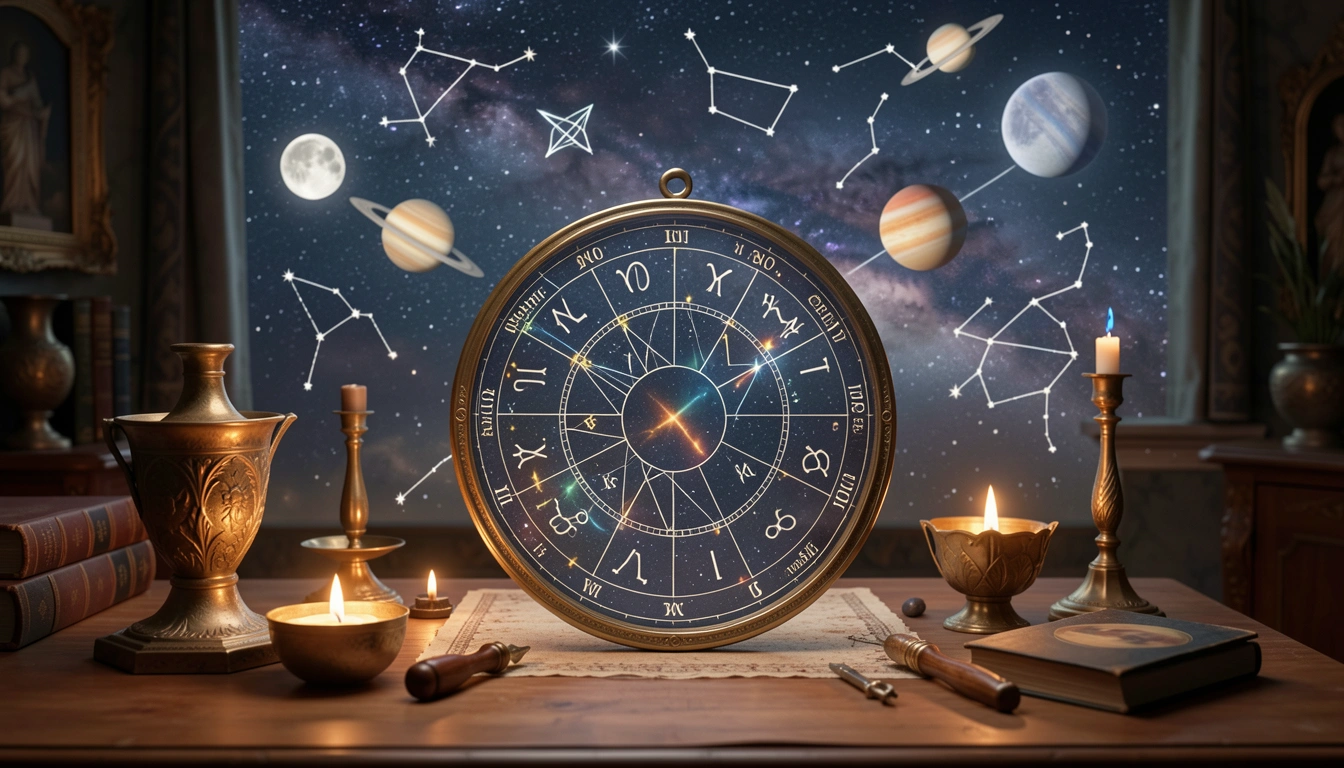
Your Sun sign is the zodiac sign the Sun was in at your birth. It represents your core self, your ego, and your conscious will. Your Moon sign is the zodiac sign the Moon was in, reflecting your emotional nature, subconscious habits, and what makes you feel safe. Your Rising sign, or Ascendant, is the sign that was rising on the eastern horizon at your exact birth time. It governs your outward behavior, physical appearance, and how others initially perceive you.
These three signs together form the foundation of your astrological identity. For example, someone with a Sun in Leo, Moon in Cancer, and Rising in Libra will have a confident, dramatic core (Leo), a sensitive, nurturing emotional side (Cancer), and a charming, diplomatic exterior (Libra). The Free Birth Chart Calculator (Natal Chart) automatically lists your Big Three at the top of the results, making it easy to identify them at a glance.
Your Sun, Moon, and Rising signs can be in the same sign or completely different elements. When they are in compatible elements (fire, earth, air, water), your personality feels more integrated. When they clash, you may feel pulled in different directions. Understanding these three placements gives you immediate insight into your fundamental nature.
How Do You Calculate Your Rising Sign?
Your Rising sign changes approximately every two hours as the Earth rotates. To calculate it accurately, you need your exact birth time and location. The Ascendant is the intersection of the eastern horizon with the ecliptic, and its sign depends on your latitude and the time of day. The birth chart calculator does this math for you, but you can also find your Rising sign by looking at the first house cusp in your chart.
What Do the Planets in Your Birth Chart Mean?
Each planet in your birth chart represents a different aspect of your psyche and life experience. The Sun symbolizes your core identity and vitality. The Moon governs your emotions and instincts. Mercury rules communication, intellect, and how you process information. Venus represents love, beauty, values, and relationships. Mars embodies drive, ambition, anger, and sexuality. Jupiter expands whatever it touches, bringing growth, optimism, and luck. Saturn brings structure, discipline, responsibility, and life lessons.
The outer planets operate on a slower, generational level. Uranus rules innovation, rebellion, and sudden change. Neptune governs dreams, intuition, spirituality, and illusion. Pluto represents transformation, power, and deep psychological processes. While the outer planets influence your generation, their house placement and aspects personalize their effect. For example, Pluto in the 4th house may indicate intense family dynamics or a need to transform your home life.
When interpreting a planet, always consider its sign, house, and aspects. A planet in its own sign (like Venus in Taurus) is comfortable and expresses easily. A planet in its detriment or fall (like Mars in Libra) may struggle or express in a more indirect way. The aspects modify this further, adding ease or tension.
What Are the Personal vs. Generational Planets?
The personal planets include the Sun, Moon, Mercury, Venus, and Mars. They move quickly and reflect your individual personality. The social planets, Jupiter and Saturn, move more slowly and relate to your social environment and life structure. The outer planets (Uranus, Neptune, Pluto) move very slowly and define generational trends. Their house placement is more important than their sign for personal interpretation.
What Do the 12 Houses Mean in Astrology?
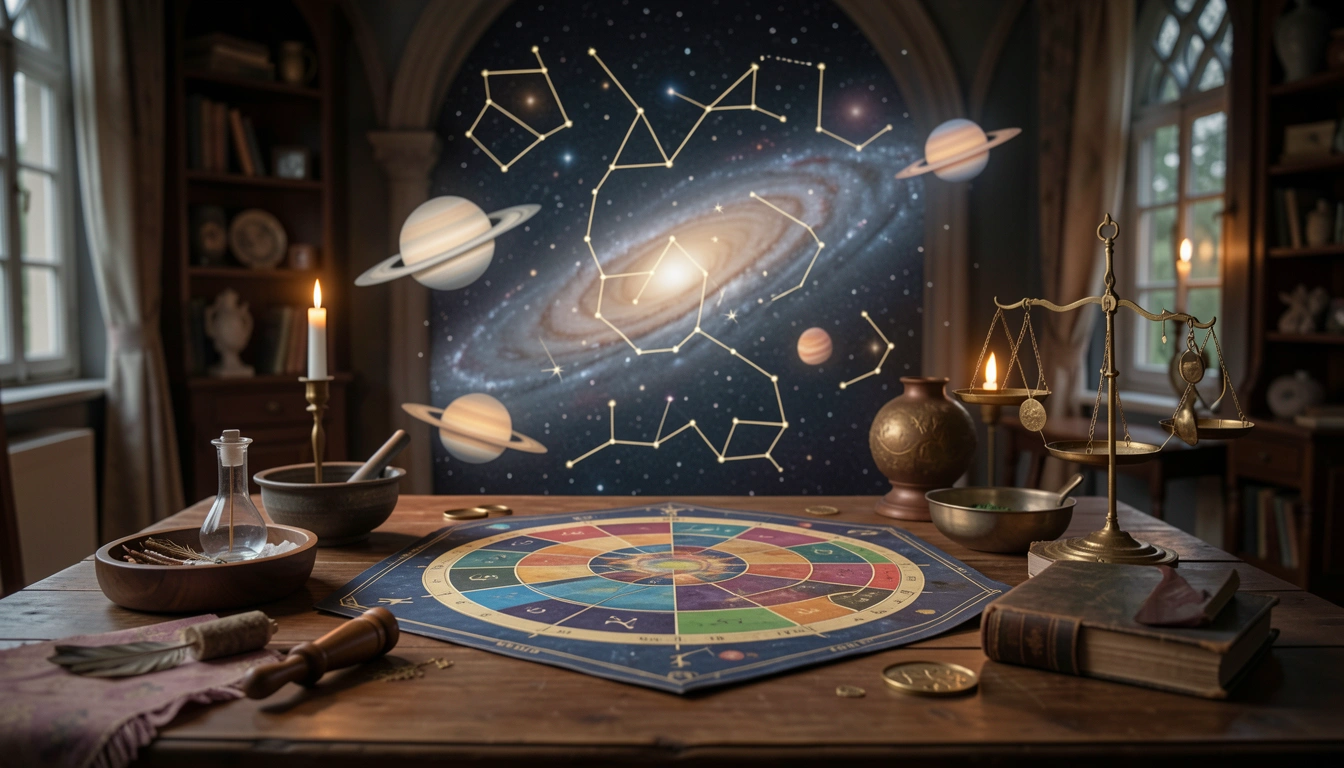
The twelve houses in a birth chart represent different areas of life. The first house rules your self-image, appearance, and how you initiate things. The second house governs money, possessions, and self-worth. The third house covers communication, siblings, and short trips. The fourth house represents home, family, roots, and your private life. The fifth house deals with creativity, romance, children, and pleasure. The sixth house rules health, daily routines, and service.
The seventh house is the house of partnerships, marriage, and open enemies. The eighth house governs transformation, shared resources, sexuality, and the occult. The ninth house covers higher education, travel, philosophy, and spirituality. The tenth house represents career, public reputation, and authority. The eleventh house rules friendships, groups, and hopes. The twelfth house deals with the subconscious, solitude, secrets, and karma.
Planets in a house activate that area of life. For example, Venus in the 7th house suggests a harmonious approach to relationships, while Saturn in the 10th house indicates a serious, ambitious career path. An empty house does not mean that area is unimportant; it simply means the house ruler (the planet that rules the sign on that house cusp) will shape its expression.
How Do You Find Which Houses Have Planets?
Your birth chart will show planets plotted inside specific houses. Look at the inner ring of the chart; each house is numbered counterclockwise from the Ascendant. The planets are placed at their degree positions within those houses. If a planet is near a house cusp (within a few degrees), it may be interpreted as influencing both houses, especially in the Placidus system.
How to Understand Zodiac Sign Placements
Each planet and point in your chart is located in a specific zodiac sign, which colors its expression. The twelve signs are grouped into four elements: fire (Aries, Leo, Sagittarius), earth (Taurus, Virgo, Capricorn), air (Gemini, Libra, Aquarius), and water (Cancer, Scorpio, Pisces). Fire signs are passionate and action-oriented. Earth signs are practical and grounded. Air signs are intellectual and social. Water signs are emotional and intuitive.
The signs are also divided into three modalities: cardinal (Aries, Cancer, Libra, Capricorn) who initiate, fixed (Taurus, Leo, Scorpio, Aquarius) who stabilize, and mutable (Gemini, Virgo, Sagittarius, Pisces) who adapt. A planet's sign placement tells you how that planet's energy operates. For instance, Mercury in Gemini is quick, curious, and communicative, while Mercury in Pisces is intuitive, imaginative, and less direct.
When reading your chart, note which signs your planets fall in. A concentration of planets in one element indicates a dominant temperament. A cluster in one modality shows your preferred style of action. The sign of each planet modifies the planet's natural expression, and the house shows where that expression plays out.
What Is the Difference Between a Sign and a House?
A sign is a 30-degree segment of the zodiac that describes a style of energy (e.g., Aries is assertive, Taurus is steady). A house is a division of the chart that describes an area of life (e.g., 1st house is self, 7th house is relationships). A planet in Aries in the 7th house would express assertiveness in relationships. Signs provide the 'how,' houses provide the 'where.'

What Do Aspects Mean in a Natal Chart?
Aspects are the angles between planets in your birth chart. They show how different parts of your personality interact. The major aspects are: conjunction (0°), where two planets blend their energies; sextile (60°), a harmonious opportunity; square (90°), a challenging tension that drives growth; trine (120°), a flowing, easy connection; and opposition (180°), a polarity that creates awareness through contrast.
Conjunctions are the most powerful aspect, intensifying the combined energy. Squares and oppositions indicate areas of friction that require conscious effort to balance. Sextiles and trines are supportive, giving you natural talents and ease. The orb, or allowed degree of separation, for major aspects is typically 8° for the Sun and Moon and 6° for other planets, though some astrologers use wider orbs.
To interpret aspects, look at the planets involved and the aspect type. A Sun square Saturn may indicate a struggle with self-confidence or authority, while a Venus trine Jupiter suggests a naturally generous and lucky love life. The Free Birth Chart Calculator (Natal Chart) lists all aspects with their orb values, making it easy to identify the strongest connections.
What Is an Aspect Orb and Why Does It Matter?
An orb is the maximum number of degrees two planets can be apart and still be considered in aspect. For example, a square is exactly 90°, but an orb of 6° means planets with an angular separation of 84° to 96° are still considered square. Smaller orbs indicate a more precise and powerful aspect. The calculator uses standard orbs and highlights exact aspects for emphasis.
Find Your Chart Ruler and Dominant Planet
Your chart ruler is the planet that rules your Rising sign. It is considered one of the most important planets in your chart because it sets the tone for your entire life approach. For example, if your Rising sign is Aries, Mars is your chart ruler. The house and sign of Mars will color your self-expression and drive. To find your chart ruler, note the sign of your Ascendant and then look for its ruling planet.
Your dominant planet is the planet that appears most prominent in your chart based on sign, house, aspects, and whether it is angular (in the 1st, 4th, 7th, or 10th house). Some astrologers calculate dominance by counting aspects or using a weighted formula. A dominant planet's energy will be especially noticeable in your personality. For instance, a dominant Jupiter may make you optimistic and expansive, while a dominant Saturn may make you disciplined and cautious.
You can also have a dominant element or modality. If most of your planets are in fire signs, you are fire-dominant. If most are in cardinal signs, you are cardinal-dominant. The Free Birth Chart Calculator (Natal Chart) often highlights these patterns in its output, helping you quickly identify your strongest astrological influences.
How Do You Determine Your Dominant Planet?
There is no single standardized method, but common approaches include: counting the number of aspects each planet makes, noting which planet rules the most angular houses, or using a point system that weights sign dignity, house placement, and aspect count. The calculator provides a simplified dominant planet indicator based on these factors.

Discover Your Element and Modality Balance
The four elements in astrology describe fundamental temperaments. Fire signs (Aries, Leo, Sagittarius) are energetic, passionate, and impulsive. Earth signs (Taurus, Virgo, Capricorn) are practical, stable, and sensual. Air signs (Gemini, Libra, Aquarius) are intellectual, social, and communicative. Water signs (Cancer, Scorpio, Pisces) are emotional, intuitive, and nurturing. Your element balance is determined by counting how many planets you have in each element.
The three modalities describe how you take action. Cardinal signs (Aries, Cancer, Libra, Capricorn) initiate and lead. Fixed signs (Taurus, Leo, Scorpio, Aquarius) stabilize and persist. Mutable signs (Gemini, Virgo, Sagittarius, Pisces) adapt and change. A balanced chart has a mix of elements and modalities, but most people have a dominant element and modality that shape their natural tendencies.
If you lack planets in a particular element, that area of life may require conscious development. For example, a lack of earth signs might mean you struggle with practicality or material security. A lack of water signs might indicate difficulty accessing emotions. The Free Birth Chart Calculator (Natal Chart) automatically calculates your element and modality balance, giving you a quick overview of your astrological makeup.
North Node, Chiron and Lilith Placements Explained
The North Node (True Node) represents your karmic path and the qualities you need to develop in this lifetime. It is not a physical body but a mathematical point where the Moon's orbit crosses the ecliptic. The South Node, opposite the North Node, shows your comfort zone and past-life tendencies. Your North Node sign and house indicate the direction for personal growth. For example, North Node in Aries in the 1st house encourages you to become more assertive and independent.
Chiron, known as the wounded healer, represents deep emotional or spiritual wounds and your ability to heal others. Its sign and house show where you feel vulnerable but also where you can offer profound wisdom. For instance, Chiron in the 7th house may indicate relationship wounds that, once healed, allow you to counsel others in partnerships.
Lilith (Black Moon Lilith) represents the dark feminine, repressed desires, and raw authenticity. It points to areas where you may rebel against societal norms or where you feel most powerful yet vulnerable. Lilith in the 10th house might indicate a career path that defies convention or a public persona that challenges authority. These three points add depth to your chart and are included in the Free Birth Chart Calculator (Natal Chart) output.
What Is the Difference Between North Node and South Node?
The North Node points forward to the qualities you need to cultivate for soul growth. The South Node points backward to familiar patterns you are meant to release. Together they form a polarity. For example, North Node in Libra and South Node in Aries means learning cooperation and balance while letting go of excessive self-focus.

Why Your Exact Birth Time and Location Matter
Your exact birth time is critical for calculating your Rising sign, house cusps, and the Midheaven. A difference of even a few minutes can shift the Ascendant by a degree or more, potentially changing your Rising sign and the entire house system. For example, if you were born at 6:02 AM instead of 6:00 AM, your Ascendant might move from 29° Scorpio to 0° Sagittarius, altering the interpretation significantly.
Your birth location determines the geographic coordinates used to calculate the house angles. Latitude affects the size of houses in the Placidus system, especially near the polar regions. Longitude affects the local sidereal time. Without accurate location data, the calculator cannot produce reliable house placements. The Free Birth Chart Calculator (Natal Chart) uses a global database of cities and time zones to ensure precision.
If your birth time is unknown, the chart will still show your Sun, Moon, and planetary signs accurately, but the houses and Rising sign will be approximate. Some astrologers use birth time rectification techniques to estimate the correct time based on life events. For most purposes, a birth time within 15 minutes of the actual time is sufficient for a reliable chart.
Can You Use an Approximate Birth Time?
Yes, but with caution. If you know your birth time within an hour, the Rising sign may still be correct if the sign does not change during that window. However, house cusps will shift. The calculator allows you to enter an approximate time and will note the uncertainty. For the most accurate interpretation, obtain your exact birth time from your birth certificate.
Can You Calculate a Birth Chart Without Birth Time?
Yes, you can generate a partial birth chart without a birth time. The Free Birth Chart Calculator (Natal Chart) offers a 'Without Accurate Time' option that sets the birth time to noon by default. This produces accurate placements for the Sun, Moon, and planets in their signs, but the Rising sign, house cusps, and Midheaven will be incorrect or approximate. The chart will still show the correct zodiac positions and aspects between planets, which can be useful for understanding your Sun and Moon signs.
Without a birth time, you lose the house system, which means you cannot determine which area of life each planet influences. For example, you might know that Venus is in Taurus, but not whether it falls in your 2nd house (values) or 7th house (relationships). The aspects between planets remain valid, however, so you can still analyze personality dynamics. The tool clearly marks which data is estimated.
If you later obtain your birth time, you can regenerate the chart with full accuracy. Many people start with a noon chart and later refine it. For serious astrological work, especially in predictive astrology or relationship synastry, an exact birth time is strongly recommended. You can also use the Free Birth Chart Calculator Without Accurate Time tool to see what is available.

Birth Chart vs. Natal Chart: Is There a Difference?
In modern astrology, the terms 'birth chart' and 'natal chart' are used interchangeably. Both refer to the same astrological map calculated for the moment of birth. The word 'natal' comes from the Latin 'natus,' meaning born. There is no technical difference between a birth chart and a natal chart. Some astrologers may prefer one term over the other, but they mean the same thing.
The Free Birth Chart Calculator (Natal Chart) on YesAstrology uses both terms in its name for clarity, ensuring that users searching for either phrase find the tool. Whether you call it a birth chart, natal chart, or horoscope, the underlying calculation and interpretation remain identical. The chart includes the same components: planets, signs, houses, and aspects.
Occasionally, 'horoscope' is used as a synonym, but it more accurately refers to the chart itself or a forecast based on transits. For the static map of your birth moment, 'birth chart' and 'natal chart' are the correct terms. This tool generates that static map and provides the foundation for all further astrological analysis.
For further reading, you can also explore Sidereal Chart Calculator.