
The Editor of YesAstrology is the senior editorial authority responsible for the quality, accuracy, and integrity of all astrology content on yesastrology.com. The editor has over a decade of astrological practice, spanning Western tropical, Vedic sidereal, and Hellenistic traditions, and oversees content strategy, writer management, and final editorial approval.
Editor of YesAstrology
Learn about the Editor of YesAstrology: editorial role, astrology expertise, content review process, and commitment to accuracy and reader trust.
Author Profile11 articles
Posts
All articles
Blog
What Your Birth Chart Says About Your Career Success
Your birth chart holds the blueprint for professional achievement. Learn which houses, signs, and planetary placements define your career path, income potential, and the timing of success.
Read more
Blog
What Is an Astrology Grand Trine?
A grand trine is a harmonious aspect pattern formed by three planets in the same element, creating a flow of energy that bestows natural talents and ease. This guide explains how to identify a grand trine, its...
Read more

Blog
What Is a Stellium in Astrology?
A stellium occurs when three or more planets gather in one sign or house, intensifying that area of life. Learn how to identify and interpret this powerful astrological configuration.
Read more

Blog
Why Do You Keep Attracting the Same Type of Person? Astrology Might Explain It
If you keep attracting the same type of partner, your birth chart holds clues. Venus, the Moon, Mars, and the 7th house reveal the deep patterns driving your relationship choices.
Read more

Blog
Why Does 2026 Feel So Different? Astrology Says a Major Shift Is Happening
2026 brings a rare Saturn-Neptune conjunction, Uranus in Gemini, and powerful eclipses. Here's what the astrology says about this major shift and how to navigate it.
Read more

Blog
The Most Powerful Zodiac Signs in 2026
In 2026, Jupiter's shift into Leo and Saturn's move into Aries reshape the zodiac's power hierarchy. Find out which signs rise, which attract luck, and how to use your strongest energies.
Read more

Blog
The Unluckiest Zodiac Signs in 2026
Certain zodiac signs will encounter more obstacles in 2026 due to powerful planetary transits. This guide reveals the rankings, explains the astrological reasons behind the difficulties, and offers practical...
Read more

Blog
The Luckiest Zodiac Signs of 2026
If you've been waiting for the universe to finally throw some good fortune your way, 2026 is shaping up to be a major turning point. Thanks to a rare alignment of Jupiter, Saturn, and Uranus, certain signs are going...
Read more

Blog
Full Moon Astrology 2026: Complete Guide
Unlock the cosmic power of every full moon in 2026. This guide covers dates, zodiac signs, spiritual meaning, manifestation practices, and sign-by-sign influences.
Read more

Blog
The Biggest Birth Chart Mistakes Almost Everyone Makes
Many people misread their birth chart by focusing only on the Sun sign, ignoring houses, aspects, birth time, and the chart ruler. Discover the most common birth chart mistakes and learn how to interpret your natal chart more accurately.
Read more

Blog
What is Astrology
What is astrology? Learn the core principles of natal astrology, the meaning of planets, signs, houses, and aspects, and how to interpret a birth chart step by step.
Read more

On this page
The Editor of YesAstrology is the senior editorial authority responsible for the quality, accuracy, and integrity of all astrology content published on yesastrology.com. This role involves curating a comprehensive library of articles, guides, and tools that help readers understand their birth charts, navigate planetary transits, and explore the deeper layers of astrological practice. The editor ensures every piece of content meets rigorous editorial standards, blending traditional astrological knowledge with modern research and practical application.
Whether you are a beginner looking for your first horoscope reading or an experienced practitioner seeking advanced chart interpretation techniques, the Editor of YesAstrology is dedicated to providing clear, trustworthy, and actionable information. The editorial approach prioritizes reader understanding over jargon, making complex astrological concepts accessible without sacrificing depth. Every article, from daily horoscopes to detailed reports on house systems and planetary dignities, is reviewed with a critical eye for factual accuracy, logical coherence, and ethical responsibility.
This page offers a transparent look at who the editor is, what the role entails, and how the editorial process works. You will learn about the editor's background in astrology, the methods used to verify sources, the standards that govern content updates, and the commitment to building a reliable resource for the global astrology community. By understanding the editorial framework, you can trust that the content you read on YesAstrology is crafted with care, expertise, and a genuine desire to help you navigate your cosmic journey.
Meet the Editor of YesAstrology
The Editor of YesAstrology brings years of dedicated study and practice in astrology, with a focus on natal chart interpretation, predictive techniques, and the integration of traditional and modern astrological systems. The editor's journey began with a fascination for the night sky and evolved into a disciplined exploration of planetary cycles, house systems, and the subtle art of synthesis. This background ensures that every piece of content is grounded in authentic astrological principles rather than superficial trends.
The editor has worked extensively with both Western tropical and Vedic sidereal frameworks, understanding the nuances of the Lahiri and Fagan-Bradley ayanamsas. Practical experience includes analyzing thousands of birth charts, advising on electional astrology for important life events, and teaching chart reading workshops. This hands-on expertise informs the editorial voice, which balances technical precision with compassionate guidance.
Beyond personal practice, the editor stays current with ongoing astrological research, attends professional conferences, and engages with the global astrological community. This continuous learning ensures that YesAstrology content reflects the latest developments in astrological thought, from emerging techniques in fixed star analysis to refinements in house division calculations. The editor is committed to presenting astrology as a dynamic, evolving discipline that respects tradition while embracing innovation.
Educational Background and Training
The editor has completed formal training in astrology through accredited programs, including certification in horoscopic interpretation and predictive astrology. Studies have covered the full spectrum of essential techniques: planetary dignities, aspect patterns, house cusps, and time-based prediction using transits, progressions, and solar returns. This structured education is complemented by self-directed research into historical astrological texts, from Ptolemy's Tetrabiblos to modern works by Robert Hand and Liz Greene.
Continuous professional development includes workshops on Hellenistic astrology, medieval horary techniques, and modern psychological astrology. The editor also maintains proficiency in astrological software and calculation tools, ensuring that content about chart calculation is technically accurate and up to date.
Editorial Role and Responsibilities
The Editor of YesAstrology holds a multifaceted role that extends far beyond simple proofreading. Primary responsibilities include content strategy development, topic selection, writer management, and final editorial approval for all published articles. The editor works closely with a team of astrologers, writers, and researchers to ensure that each piece aligns with the platform's editorial vision: to provide accurate, insightful, and accessible astrology content for a global audience.
Day-to-day tasks involve reviewing article drafts for astrological accuracy, logical flow, and reader comprehension. The editor checks that technical terms like 'cazimi,' 'combust,' and 'under the beams' are correctly defined and applied. House system choices, orb tolerances, and planetary dignity calculations are verified against established standards. The editor also ensures that content is inclusive, ethically sound, and free from deterministic or fear-based language that could mislead readers.
Another critical responsibility is maintaining the editorial calendar, which balances evergreen educational content with timely articles tied to current transits, eclipses, and planetary stations. The editor prioritizes topics that address common reader questions, such as 'What does my rising sign mean?' or 'How do I interpret a Saturn return?' This reader-centric approach helps YesAstrology become a trusted first stop for astrological learning.
Content Review and Quality Assurance
Every article undergoes a structured review process. The editor first evaluates the article's thesis, ensuring it addresses a genuine reader need. Next, technical accuracy is checked: planetary positions, aspect orbs, house placements, and dignity calculations are cross-referenced with reliable ephemeris data. The editor also reviews citations and source references to confirm they come from authoritative astrological texts or peer-reviewed research.
Finally, the editor reads each article from the perspective of a curious beginner, identifying jargon that needs explanation and concepts that require more context. This quality assurance step ensures that content is both expert-approved and genuinely helpful to readers at all levels.

Astrology Background and Expertise
The Editor of YesAstrology brings over a decade of dedicated astrological practice to the role. This expertise spans multiple traditions, including Western tropical astrology, Vedic sidereal astrology, and Hellenistic techniques. The editor has a deep understanding of house division systems, from Placidus and Whole Sign to Koch, Equal, and Regiomontanus, and can explain the practical implications of each choice for chart interpretation.
Specialized knowledge includes essential and accidental dignities, planetary joys, and the nuanced conditions of planetary strength. The editor is well-versed in calculating and interpreting Arabic Parts, with particular focus on the Part of Fortune and Part of Spirit. Experience with synastry and composite charts enables the editor to oversee relationship content with authority, while familiarity with astrocartography and relocation charts supports the platform's geographic astrology tools.
The editor also maintains a working knowledge of astronomical concepts that underpin astrology, such as precession of the equinoxes, planetary retrograde motion, and the true versus mean lunar nodes. This scientific literacy ensures that content about chart calculation is not only astrologically sound but also astronomically correct.
Areas of Specialization
- Natal Chart Interpretation: Comprehensive analysis of planetary placements, aspects, house positions, and dignity profiles.
- Predictive Astrology: Transits, progressions, solar returns, and profections for timing life events.
- Electional Astrology: Selecting optimal dates for weddings, business launches, and other significant undertakings.
- Synastry and Relationships: Comparing charts to understand compatibility, dynamics, and growth areas.
- Horary Astrology: Answering specific questions by casting a chart for the moment of inquiry.
Approach to Astrology Content
The Editor of YesAstrology believes that astrology content should empower readers, not overwhelm them. Every article is crafted with a clear purpose: to answer a specific question, teach a practical skill, or provide a meaningful insight. The editorial approach prioritizes clarity, accuracy, and actionable takeaways. Articles avoid vague generalizations and instead offer concrete examples, step-by-step guidance, and interpretation frameworks that readers can apply to their own charts.
The editor emphasizes a balanced perspective, acknowledging both the strengths and limitations of astrological analysis. Content regularly addresses common pitfalls, such as over-reliance on Sun sign horoscopes or misinterpretation of retrograde planets. By presenting astrology as a tool for self-reflection rather than deterministic prediction, the editor helps readers use astrology responsibly and ethically.
Another key principle is inclusivity. The editor ensures that content respects diverse cultural backgrounds, gender identities, and life experiences. Language is chosen carefully to avoid stereotypes and to honor the complexity of human experience. The goal is to create a welcoming space where anyone, regardless of their astrological literacy, can find value and guidance.
Balancing Tradition and Modernity
The editor integrates traditional astrological techniques, such as essential dignities and whole sign houses, with modern psychological approaches that focus on personal growth and archetypal understanding. This synthesis allows content to honor the roots of astrology while remaining relevant to contemporary readers. For example, an article about Saturn return will explain the traditional timing and challenges while also offering modern coping strategies and psychological insights.
How Articles Are Reviewed and Updated
The Editor of YesAstrology oversees a rigorous review and update process to ensure that all content remains accurate, relevant, and useful. Each article is initially reviewed for astrological accuracy, logical coherence, and readability before publication. But the work does not stop there. A scheduled review cycle ensures that older articles are revisited periodically, particularly those covering time-sensitive topics like planetary transits or annual predictions.
When an article is updated, the editor checks that all ephemeris data, planetary positions, and timing references are still current. For example, an article about Jupiter in Aries written two years ago may need revision to reflect the planet's current sign placement. The editor also reviews reader comments and questions to identify areas where additional clarification or examples would be helpful. This feedback loop helps the content evolve to meet reader needs.
Updates are clearly noted at the top or bottom of each article, with a 'last reviewed' date so readers know the content is current. The editor also maintains a changelog for major revisions, ensuring transparency about what changed and why. This commitment to ongoing improvement builds long-term trust with the audience.
Version Control and Transparency
For significant updates, the editor provides a brief summary of changes, such as 'Updated transit dates for 2025' or 'Revised interpretation of Moon in Capricorn based on new research.' This transparency helps returning readers quickly understand what has changed and why. It also demonstrates a commitment to accuracy and accountability, which are cornerstones of the YesAstrology editorial philosophy.
Editorial Standards at YesAstrology
The Editor of YesAstrology enforces a strict set of editorial standards that govern every piece of content on the platform. These standards are designed to ensure accuracy, ethical responsibility, and reader value. At the core is a commitment to factual correctness: all astrological claims must be verifiable through reliable sources, such as established astrological texts, peer-reviewed research, or direct calculation from ephemeris data.
Ethical guidelines prohibit content that promotes fear, fatalism, or deterministic readings. The editor ensures that articles frame astrology as a tool for self-awareness and empowerment, not as a means of predicting unavoidable doom. Language that could be interpreted as medical, legal, or financial advice is clearly disclaimed. The editor also avoids making absolute claims about personality traits based solely on Sun signs, emphasizing the complexity of the full birth chart.
Another key standard is accessibility. The editor requires that all content be written in clear, plain language, with technical terms defined on first use. Articles are structured with scannable headings, short paragraphs, and bullet points where appropriate. This makes the content usable for readers with varying levels of astrological knowledge, from complete beginners to seasoned practitioners.
Ethical Content Guidelines
- No Fear-Mongering: Avoid language that induces anxiety about planetary transits or placements.
- Empowerment Focus: Frame every interpretation as an opportunity for growth and self-understanding.
- Inclusivity: Use gender-neutral language where possible and respect diverse cultural perspectives.
- Transparency: Clearly distinguish between established astrological principles and the editor's personal interpretations.
Research and Source Selection Process
The Editor of YesAstrology takes source selection seriously, knowing that the credibility of astrology content depends on the quality of its references. The editorial team prioritizes primary sources, such as classical astrological texts by Ptolemy, Valens, and Abu Ma'shar, as well as modern authoritative works by recognized astrologers. Secondary sources are used only when they add clear value, such as peer-reviewed studies on astrology's psychological effects or historical analyses of astrological traditions.
For technical content, such as articles about house systems or planetary dignities, the editor consults multiple sources to ensure accuracy. For example, when explaining the difference between Placidus and Whole Sign houses, the editor references both traditional texts and contemporary practitioners who use each system. This multi-source approach minimizes bias and provides readers with a balanced understanding of the options available.
The editor also maintains a curated library of reference materials, including ephemeris data, astrological dictionaries, and software manuals. This library is regularly updated to include new research and emerging techniques. By grounding content in solid research, the editor ensures that readers receive information they can trust and apply with confidence.
Evaluating Online Sources
When using online sources, the editor applies strict criteria: the source must be authored by a recognized astrologer with verifiable credentials, the content must be internally consistent and well-referenced, and the site must have a clear editorial policy. Sources that rely on anecdotal evidence or make extraordinary claims without support are excluded. This rigorous vetting process maintains the high standard of YesAstrology content.
Accuracy, Clarity and Reader Trust
The Editor of YesAstrology understands that trust is the foundation of any astrology platform. Readers come to YesAstrology seeking guidance, and they deserve content that is both accurate and clear. Accuracy means more than just correct planetary positions; it means using appropriate orbs, choosing the right house system for the context, and interpreting aspects with nuance. The editor personally verifies all technical calculations and reviews interpretations for logical consistency.
Clarity is equally important. An accurate article that is written in dense, academic language will fail to help most readers. The editor works to present complex ideas in a straightforward manner, using examples and analogies that resonate. For instance, an explanation of a 'Yod' aspect pattern includes a simple diagram description and a real-life example of how it might manifest in a person's life. This approach transforms abstract astrological concepts into practical, relatable insights.
Reader trust is also built through transparency. The editor clearly identifies when content is based on traditional teachings versus personal interpretation. Articles that discuss controversial topics, such as the use of outer planets in horary astrology, acknowledge differing viewpoints. This honesty helps readers make informed decisions about how to apply the information to their own practice.
Building Long-Term Trust
Trust is not built overnight. The editor's consistent commitment to quality, responsiveness to reader feedback, and willingness to correct errors promptly all contribute to a reputation for reliability. Readers know that if they find a mistake, the editorial team will address it quickly and transparently. This accountability fosters a loyal community of readers who rely on YesAstrology as a trusted resource.
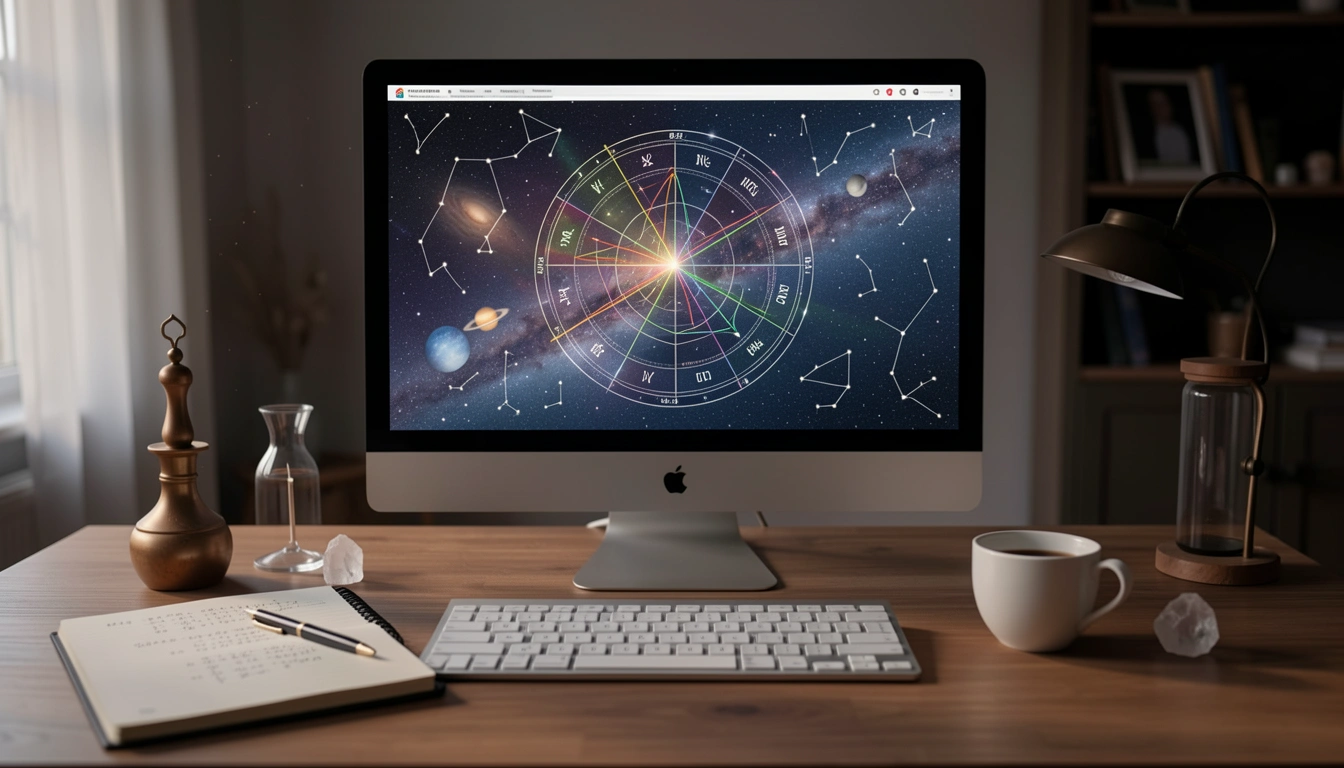
Experience with Birth Charts and Astrology Tools
The Editor of YesAstrology has extensive hands-on experience with birth chart calculation and interpretation, which directly informs the development and review of astrology tools on the platform. The editor has worked with a wide range of chart calculation software, from professional-grade programs like Solar Fire to open-source libraries like PyEphem. This technical familiarity ensures that the tools offered on YesAstrology, such as the Free Birth Chart Calculator, are accurate, user-friendly, and reliable.
The editor regularly tests these tools to verify that they produce correct results across different house systems, zodiac frameworks, and ayanamsa settings. For example, a user calculating a chart with Whole Sign houses should see the same house cusps as those produced by a trusted ephemeris. The editor also reviews tool interfaces to ensure they are intuitive, with clear labels and helpful tooltips that explain astrological terms as they appear.
Beyond birth charts, the editor has experience with specialized tools like the Astrocartography Chart Calculator and the Electional Astrology Calculator. This hands-on involvement ensures that tool descriptions, user guides, and interpretation resources are accurate and practical. The editor's goal is to make these tools not just functional, but genuinely educational, helping users understand the astrological principles behind the calculations.
Tool Testing and Validation
Before any tool is launched or updated, the editor runs a series of validation tests using known chart examples. For instance, a birth chart for a specific date, time, and location is calculated and compared against outputs from multiple reputable sources. Any discrepancies are investigated and resolved before the tool goes live. This rigorous testing ensures that users can trust the calculations and focus on interpretation.
Featured Articles and Guides
The Editor of YesAstrology has curated a collection of featured articles and comprehensive guides that represent the best of the platform's content. These pieces are selected for their depth, accuracy, and ability to answer common reader questions. Topics range from beginner-friendly introductions to advanced techniques for experienced astrologers. Each featured article is a model of editorial excellence, demonstrating the standards that the editor upholds across all content.
Among the most popular guides is the series on birth chart interpretation, which walks readers through each step of analyzing a natal chart: from identifying the rising sign and house cusps to evaluating planetary dignity profiles and aspect patterns. Another standout is the guide to predictive astrology, which explains how to use transits, progressions, and solar returns to forecast life themes. The editor also oversees the 'Astrology Methodology' page, which provides a transparent overview of the techniques and principles used across the site.
Featured articles are regularly updated to reflect new insights and reader feedback. The editor also uses these pieces to introduce new topics, such as the integration of fixed stars or the use of Arabic Parts in modern interpretation. By highlighting these articles, the editor gives readers a clear path to deepening their astrological knowledge.
How to Use the Featured Content
Readers can access featured articles from the Blog and Reports pages. The editor recommends starting with the birth chart interpretation series if you are new to astrology, or the predictive astrology guide if you are ready to explore timing techniques. Each article includes links to related tools and resources, creating a connected learning experience.
Latest Content Reviewed by the Editor
The Editor of YesAstrology personally reviews all new content before it reaches the public. The latest articles cover a range of timely and timeless topics. Recent additions include an in-depth analysis of the Saturn-Pluto conjunction cycle, a practical guide to using the Draconic Synastry Calculator, and an updated article on the meaning of the lunar nodes in the natal chart. Each piece has been vetted for accuracy, clarity, and ethical considerations.
The editor also reviews content related to new tools and features. For example, when the platform introduced the Chariklo Sign Calculator, the editor wrote and reviewed an accompanying guide explaining the significance of this asteroid in astrology. Similarly, the Juno Sign Calculator was launched with a comprehensive article on asteroid Juno's role in relationship astrology. This integrated approach ensures that tool users have the context they need to interpret their results.
To stay informed about the latest content, readers can visit the Blog page, which lists recent articles with publication dates and editor review notes. The editor encourages readers to subscribe to the newsletter for updates on new content and tools.
Recent Content Highlights
- Saturn-Pluto Cycle: A deep dive into the historical and personal significance of this major planetary cycle.
- Draconic Synastry: How to use the Draconic chart to explore karmic relationship dynamics.
- Chariklo in Astrology: Understanding the asteroid Chariklo's influence on healing and wisdom.
- Lunar Nodes Update: Revised interpretation of the North and South Nodes with new examples.
Contact the YesAstrology Editorial Team
The Editor of YesAstrology values reader feedback and encourages open communication. If you have questions about an article, suggestions for new topics, or feedback on how content can be improved, the editorial team wants to hear from you. While the editor cannot respond to individual chart reading requests, comments and questions about content are always welcome and are used to shape future articles.
For general inquiries, the best starting point is the Frequently Asked Questions page, which addresses common questions about astrology, tools, and site features. If your question is not answered there, you can use the contact form available on the site. The editorial team aims to respond to all substantive inquiries within a few business days.
Please note that the editorial team does not provide personal astrological consultations. For personalized readings, consider using the premium report tools available on the Reports page, which generate detailed interpretations based on your birth data. The editor reviews these reports to ensure they meet the same high standards as the rest of the content on YesAstrology.
How to Reach Us
For content-related feedback, please include the article title and your specific question or suggestion. This helps the editorial team quickly locate the relevant material and provide a thoughtful response. While we appreciate all input, we prioritize feedback that helps us improve accuracy, clarity, and reader experience.