On this page
Your natal chart is a photograph of the sky at your birth, but the sky keeps moving after that photograph is taken. A Life Cycles & Planetary Returns Timeline takes those movements and turns them into a chronological map of your major turning points, from birth into your 90s. It tracks the moments when slow-moving planets return to the exact positions they held in your chart, along with other key milestones such as Uranus Opposition and Nodal Cycles.
Planetary returns are among the most reliable timing tools in astrology. Each one marks a completion and a reset: Jupiter rounds the chart every 12 years to expand your opportunity cycle, Saturn returns around ages 29, 58 and 88 to test your structures, and Chiron returns near age 50 to ask for healing. When these events appear together on one timeline, you can finally see why certain decades feel so different from others.
The timeline is designed to be practical, not fatalistic. You can use it to prepare for a difficult return before it arrives, cooperate with an expansive cycle while it is active, and make sense of a past chapter once it closes. The rest of this guide explains how each cycle works, how to interpret your personal results, and where you can generate your own timeline.
What Is a Life Cycles & Planetary Returns Timeline?
At its simplest, a Life Cycles & Planetary Returns Timeline is a chronological map of the major astrological milestones in one person's life. It combines several slow-moving cycles so you can see which years carry a single return, which years overlap with several, and which decades are largely quiet. The result is less like a daily horoscope and more like a life-stage atlas.
Every entry on the timeline is tied to actual planetary motion. A planetary return happens when a transiting planet reaches the same zodiac degree and sign it occupied in your natal chart. The Moon does this every month, but for long-term life cycles the important intervals are measured in years. Saturn returns take about 29 years, Jupiter returns roughly 12, and the Moon's Nodal Return takes about 18.6 years.
The YesAstrology Life Cycles & Planetary Returns Timeline places Saturn Return, Jupiter Return, Uranus Opposition, Chiron Return and Nodal Cycles on the same visual frame. Because these cycles have different speeds, their intersections become meaningful. A year where a Saturn Return and a Nodal Cycle converge can feel completely different from a year with a single Jupiter Return.
None of these cycles removes your free will. Think of them as seasons: you cannot change winter, but you can decide whether you plant, rest or renovate while it lasts.
Why a timeline works better than isolated transits
Single-transit astrology answers narrow questions: will this month bring change, or will this year test my career? A timeline answers broader questions. It helps you map the arc of adulthood, spot repeating themes, and understand why a certain age brought a structural collapse or an unexpected gift. The timeline is especially useful for people in their late 20s, late 50s and early 80s, when multiple outer cycles align.
Planetary returns are based on celestial longitude, not house divisions, which is why the date of a return is so stable. The house that the return activates, however, depends on your exact birth time and the house system you use.
Return vs. cycle milestone
The phrase planetary return refers specifically to a planet coming back to its natal longitude. Uranus Opposition is a related milestone but not a return: it occurs when the planet sits opposite its natal position, which usually happens midway through its cycle. Nodal Cycles are also included on the timeline because the Moon's Nodes trace an 18.6-year rhythm that many astrologers connect with life direction and karmic development.
Both returns and oppositions are useful because they reveal points of maximum pressure and maximum alignment. A timeline that includes only one type would miss half of the story.
How Do Planetary Returns Shape Major Life Cycles?
Each slow planet carries a different function, and when that planet returns to its starting point it reopens a core life theme. The table below shows the major cycles tracked on the timeline and the approximate age windows associated with each one.
| Cycle | Typical Timing | Main Theme |
|---|---|---|
| Jupiter Return | Every 11.9 years | Expansion, opportunity, meaning |
| Saturn Return | Around 29 and 58 | Maturity, accountability, structure |
| Uranus Opposition | Around 39 to 44 | Awakening, independence, midlife revision |
| Chiron Return | Around 49 to 51 | Deep healing, wound work, wisdom |
| Nodal Cycle | Every 18.6 years | Life direction, relationship timing, karmic recalibration |
Jupiter Returns come roughly every 12 years and are usually experienced as an opening: new people, new study, new luck or wider horizons. Saturn Returns arrive around ages 29 and 58 and ask you to take ownership of the structures you have created. Uranus Opposition lands near 39 to 44 and challenges you to live more authentically. Chiron Returns, near 50, tend to resurface old wounds with more skill to heal them. Nodal Cycles reset your compass every 18.6 years.
The exact meaning of each return depends on the sign and house of the planet in your natal chart. A Saturn Return in your 4th house will be experienced through home, family and inner foundations; a Saturn Return in your 10th house will play out through career, reputation and public responsibility. The same outer event is completely different in a different chart position.
How to interpret each return
Start with the planet, then its sign and house. Ask what that planet represents in your chart, what the sign says about its style, and which life department the house activates. Then look at the aspects made by the return: a Saturn Return conjunct your natal Sun feels very different from one that squares your Moon. The timeline gives you the timing, but your natal chart gives you the story.
A useful baseline is to treat the first exact hit of a return as the announcement, the second as the deepening, and the third as the result. For outer planets, this pattern can stretch over months. This is why you should never judge a return by a single date.
What makes a return feel powerful
Power comes from several factors: how close the planet is to an angle such as the Ascendant or Midheaven, how strong it is by sign, and whether it activates a natal planet by conjunction, opposition or square. A return involving a natal angular planet or the chart ruler usually feels more significant than one in an unaspected background position. House placement also shifts if you use Placidus, Whole Sign or Equal houses. The return date stays essentially the same, but the life area it colors can move by one house depending on your system.
If you need to confirm your natal house placements before reading your timeline, you can generate your natal chart using the Natal Chart Calculator.
Generate Your Personal Planetary Returns Timeline
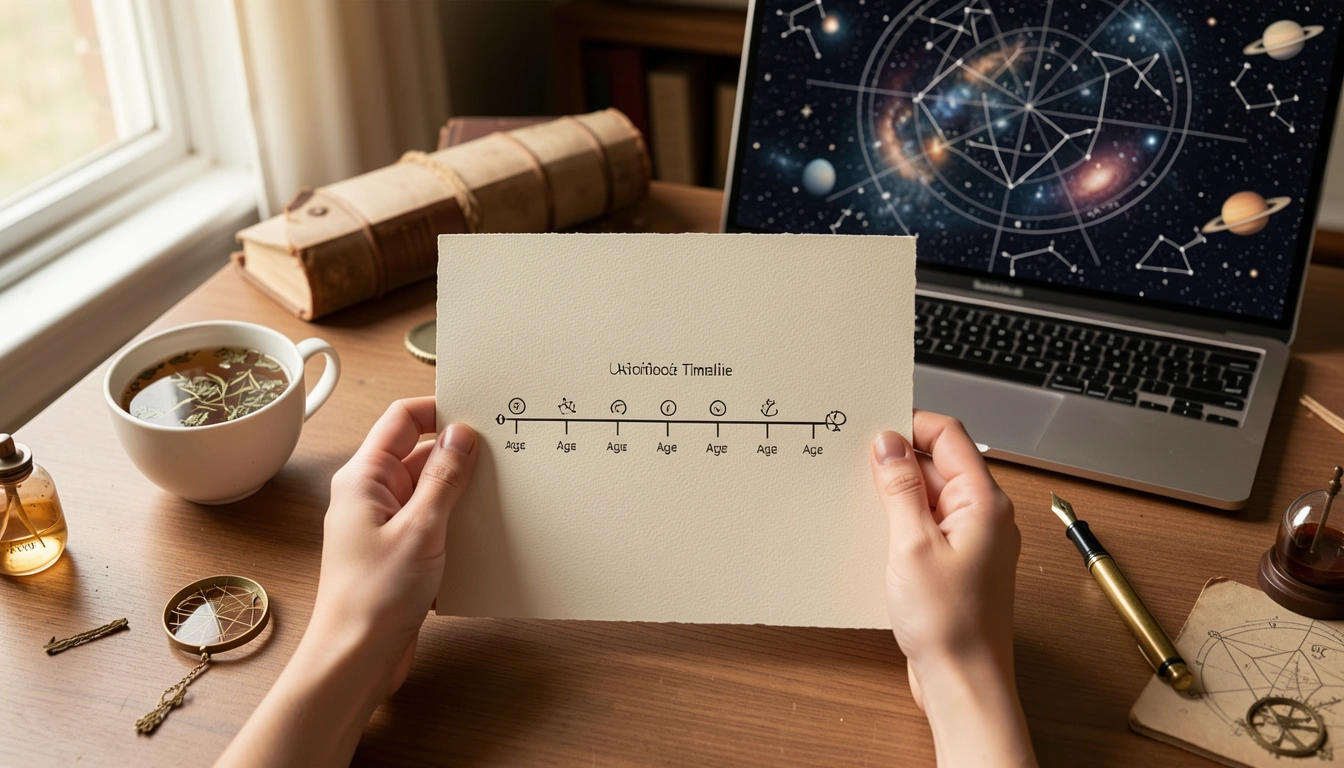
Generating your personal timeline is the fastest way to move from theory to self-knowledge. The YesAstrology Life Cycles & Planetary Returns Timeline tool asks for your birth details and then calculates the major returns and milestones that will shape your life from birth through age 90 and beyond. You receive age markers for each cycle, so you can see the coming chapters before they arrive.
If you want a focused view of each planet instead of a full map, use the Planetary Return Finder to see the exact return dates embedded in your longer timeline. The two tools work well together: one gives the big picture, the other gives the precise hit.
Once you have your timeline, do not just glance at it. Write down the next few milestones, then note which sign and house each return activates. If you already know your chart, circle the returns that touch your Sun, Moon, Ascendant or Midheaven. Those are usually the ones you feel most strongly.
What birth data you need
Accurate birth details give the clearest result. Your birth date is enough to calculate outer-planet return dates, because Saturn, Jupiter, Uranus, Chiron and the Nodes move slowly enough that a return date remains stable even without a precise birth time. Your exact birth time becomes important once you want to know which house each return falls into. If your birth time is missing or uncertain, the planetary timing remains useful but the house placement should be treated as unconfirmed.
How to read the output
On the generated timeline you will typically see multiple entries for one cycle. A Saturn Return may appear with more than one date because Saturn stations retrograde and crosses the same degree several times. That does not mean the tool is wrong; it means the activation happens in waves. The same logic applies to Jupiter returns and Nodal Cycles.
When you read the output, focus on clusters. If two or three milestones land in the same year, that year deserves extra attention. If a long stretch of your timeline is quiet, use that period for momentum rather than waiting for crisis.
Saturn Return and Major Maturity Cycles
The Saturn Return is the backbone of any maturity cycle timeline. It is not one event; it is a sequence of Saturn Returns spaced roughly 29 years apart. The first, between 27 and 30, forces you to become accountable for your life choices. The second, between 56 and 60, asks you to consolidate what you have built and release the rest. The third, in the late 80s, is rare but powerful; it closes the material cycle and asks for legacy.
Although Saturn receives the most attention, the timeline shows that maturity is built through several related cycles. The Uranus Opposition in the early 40s often functions as a midlife correction, pushing you closer to your authentic self. The Chiron Return near 50 brings an emotional and relational reckoning. When these overlap with a Saturn cycle, you are being asked to change not just your behavior but your inner relationship with time, authority and worth.
The Jupiter Return plays a different role. It generally feels lighter and can bring an opportunity that the Saturn Return later asks you to sustain. One opens the door; the other tests the foundation. A mature timeline is one where you can tell those two voices apart.
How to work with a Saturn Return
First, verify the timing. The Saturn Return Calculator will identify the precise passages rather than relying on a generic age range. Then look at the sign and house of your natal Saturn. A Saturn Return in the 10th house may coincide with a public shift; one in the 4th house may bring a family reckoning or a move. Keep a journal from six months before the exact hit to six months after, and notice what is being asked of you.
Give yourself room to finish things that are genuinely complete. Saturn rewards clarity. It does not reward stubbornness. This is the cycle where you make adult decisions, set boundaries, and become the authority in your own life.
Common mistakes on maturity cycles
Three mistakes ruin most Saturn Return readings. The first is treating the exact date as the only event; the Saturn Return is better understood across its whole activation window. The second is ignoring the natal context; Saturn means very little without its sign, house and aspects. The third is using the cycle as an excuse to blame every difficulty on astrology. The purpose of a Saturn Return is not to punish you. It is to make your life structurally honest.
After you generate your timeline, mark three dates: your next Jupiter Return, your next Saturn Return and your next Nodal Cycle. Keep this page somewhere visible. When each window opens, check which house is being activated and review the journal entries you have already written. That simple practice turns the timeline from an idea into a working life map.
Jupiter Return and Growth Cycles
Every twelve years or so, Jupiter completes a full orbit around the Sun and returns to the exact position it occupied at the moment of your birth. This event, known as the Jupiter return, marks the beginning of a new twelve-year cycle of expansion, optimism, and personal development. It is the universe's way of handing you a fresh chapter of growth—one that invites you to step into a broader version of yourself.
During a Jupiter return, the planet's expansive energy amplifies whatever house and sign it touches in your natal chart. If Jupiter returns to your first house, you might feel a surge of confidence and a desire to reinvent your identity. In the tenth house, career opportunities often blossom, while the seventh house can bring meaningful relationships or partnerships that elevate your life. The key is to recognise that Jupiter doesn't just hand you luck—it opens doors, but you have to walk through them.
Astrologically, we look at the degree of the return chart and its aspects to natal planets. A Jupiter return conjunct your natal Sun can feel like a personal renaissance. A square to Saturn might temper the enthusiasm with practical lessons, reminding you that growth is not always comfortable. The orb of influence is typically tight—within one to two degrees for the most potent effects—but the entire year surrounding the exact return carries a Jupiterian signature.
The 12-Year Cycle of Opportunity
Because Jupiter takes roughly one year to move through each zodiac sign, your return cycle aligns with significant stages of life. The first Jupiter return around age twelve coincides with the onset of adolescence and a broadening of social horizons. The second at twenty-four often brings the first major career or educational leap. By thirty-six, you are usually consolidating your life's direction, and by forty-eight, you may be mentoring others or stepping into leadership roles. Each return builds on the last, and by tracking them with a planetary return finder, you can anticipate the themes before they arrive.
Jupiter Returns and Personal Growth
While the exact return lasts only a day, its influence unfolds over several months. You might feel a restless urge to learn, travel, or take a risk that previously seemed daunting. This is Jupiter asking you to trust the process. The wisdom of the return lies in recognising that not all opportunities are meant to be pursued—some are distractions disguised as blessings. By staying grounded and filtering Jupiter's enthusiasm through the lens of your natal chart's more disciplined planets, you can make choices that genuinely expand your life rather than just inflate it.
Uranus Return and Midlife Transformation
Uranus takes approximately 84 years to complete its orbit, which means a full Uranus return—when transiting Uranus returns to its natal position—occurs only once in a typical human lifetime, around age 84. However, the more commonly felt midlife awakening comes from the Uranus opposition, which happens when transiting Uranus is 180 degrees from its natal position, usually between ages 38 and 44. This is the famous 'midlife crisis' astrological event, though it is better understood as a liberating disruption rather than a crisis.
The Uranus opposition forces you to confront the parts of your life that have become too rigid or inauthentic. Career, marriage, and personal identity all come under the Uranian microscope. The goal is not comfort but freedom. In your natal chart, the house where Uranus resides and the house it opposes during the transit reveal where the breaking point and the breakthrough will occur. For example, if Uranus is in your fourth house opposing the tenth, you might feel a sudden urge to leave a stable career to pursue a more unconventional lifestyle or to relocate entirely.
By the time you reach the actual Uranus return at 84, the energy shifts from disruption to integration. After a lifetime of Uranian shocks and revelations, the return offers a chance to fully own your uniqueness. It is a time of profound acceptance of one's eccentricities and a release from the need for external approval. The personal transit calendar can help you track the exact timing of both the opposition and the return, allowing you to prepare for these transformative passages.
Uranus Opposition: The Midlife Awakening
During the Uranus opposition, which lasts about two years with a one-degree orb, you may experience sudden changes in relationships, career, or living situation. The planet rules rebellion, innovation, and sudden insight. This transit is famous for triggering divorces, career changes, and spiritual awakenings. The key is to welcome the disruption as a necessary correction. If you feel a persistent restlessness or a sense that something has to give, Uranus is speaking. Resist, and the changes may come through external events; lean in, and you can co-create a life that aligns more authentically with your true self.
The Full Uranus Return at 84
Few people experience a complete Uranus return, but those who do often report a sense of coming full circle. The rebellious energies of youth are revisited, but now with the wisdom of a lifetime. For those in their eighth decade, this return can spark a creative renaissance, a late-life activism, or a final shedding of inhibitions. It is a potent time for completing unfinished creative projects or embracing new technologies. Astrologers note that the house position of the return chart's Uranus can highlight the arena where this final liberation occurs.

Neptune Return and Spiritual Development
Neptune's orbit takes about 165 years, so a full Neptune return—when transiting Neptune returns to its exact natal position—is an event that spans generations rather than individual lives. No one alive today will experience a personal Neptune return from birth unless they live well beyond the current human lifespan. Yet the influence of Neptune's return is deeply felt on a collective level, shaping the spiritual and artistic currents of an era. The last Neptune return in Pisces (2011–2025) is a profound example, dissolving old boundaries between reality and imagination across global culture.
On a personal level, the more accessible Neptunian milestones are the Neptune square (around age 40–42) and the Neptune opposition (around age 80–85). These transits trigger moments of spiritual crisis, disillusionment, or transcendent insight. The Neptune square often coincides with the Uranus opposition, creating a potent mix of awakening and dissolution. During these times, you may feel a pull toward mysticism, creativity, or escapism. The planetary return finder on YesAstrology can locate your current Neptunian transits and help you navigate them with clarity.
The house placement of your natal Neptune and the house it transits during these aspects reveal where you are most susceptible to illusion and where you can access true spiritual vision. For instance, Neptune transiting the seventh house might dissolve a marriage that was built on fantasy, while Neptune in the twelfth house can open profound psychic awareness. The key is to distinguish between compassionate surrender and outright deception—a skill that Neptune itself takes a lifetime to teach.
The Generational Signature of Neptune Returns
When Neptune returns to the same sign it occupied at a specific historical moment, entire generations experience a collective spiritual reset. The last Neptune return in Pisces coincided with a surge in interest in meditation, psychedelics, and non-dual spirituality. Art, music, and film became more fluid and dreamlike. The next Neptune return in Aries, around 2175, will likely bring a different energy—perhaps a spiritual warrior archetype or a direct, action-oriented mysticism. By studying past Neptune returns, astrologers can sense the thematic arc of cultural evolution.
Navigating Neptunian Transits
During a Neptune square or opposition, it is essential to maintain a strong grounding practice. Neptune can blur boundaries, making it hard to know what is real. Journaling, therapy, and creative expression can help channel the energy constructively. Avoid major decisions during the exact transit if possible, as clarity is low. Instead, focus on meditation, dream work, and acts of service. The gift of these transits is a deepened connection to the transcendent, but only if you hold onto a tether to the material world.
Pluto Return and Generational Transformation
Pluto's orbit takes about 248 years, making a Pluto return an event that occurs roughly once every two and a half centuries. No individual experiences a personal Pluto return; instead, these returns are collective, marking the transformation of entire societies, nations, and cultural eras. A Pluto return happens when transiting Pluto returns to the same sign it occupied at the founding of a nation, the birth of a movement, or the start of a significant historical cycle. The most famous example is the United States Pluto return, which began in 2022 and will continue until 2044, signalling a profound restructuring of American identity and power structures.
On a personal level, the closest we come to a Plutonic milestone is the Pluto square (around age 35–45) and the Pluto opposition (around age 70–80). These transits are times of intense psychological depth, power struggles, and transformation. The Pluto square, often coinciding with the Uranus opposition and Neptune square, creates a cauldron of midlife pressure. It forces you to confront your shadow, your deepest fears, and your relationship with control. The house and aspects of your natal Pluto determine where this pressure manifests—whether in finances, relationships, career, or personal authority.
The natal chart calculator can reveal your Pluto sign and house, while the planetary return finder tracks your current Pluto transits. Understanding these cycles allows you to work with Plutonic energy rather than being crushed by it. The goal of a Pluto square or opposition is not comfort; it is empowerment through facing the truth. When you emerge from these transits, you are more authentic, more powerful, and more aligned with your soul's purpose.
The Collective Pluto Return
When Pluto returns to the sign it occupied at a nation's founding, that country undergoes a fundamental transformation. For the United States, Pluto last transited Capricorn—its founding sign—during the Revolutionary War. The current return in Aquarius (2022–2044) is shaking the foundations of government, finance, and collective identity. Similar returns have been observed in other nations throughout history. Studying these events from an astrological perspective offers a blueprint for understanding global shifts in power, technology, and social structure.
Pluto Transits in Personal Charts
While you may never experience a Pluto return, you will face Pluto squares and oppositions that are equally transformative. The Pluto square around age 35–45 is often a period of intense self-confrontation. The Pluto opposition around age 70–80 can bring a final reckoning with legacy and mortality. During these times, it is crucial to engage in deep inner work—therapy, shadow work, or spiritual practice. Pluto rewards those who face their darkness with honesty and punishes those who cling to illusions of control. The outcome is always a more authentic life.

Lunar Nodes and Karmic Life Cycles
The Lunar Nodes are not physical planets but mathematical points where the Moon's orbit crosses the ecliptic — and they carry profound karmic weight. The North Node points toward the lessons you're here to embrace, while the South Node reveals the comfort zone you tend to fall back on. Together, they form an axis that rotates through the zodiac over roughly 18.6 years, creating a natural timeline for soul evolution.
Every 18 to 19 years, the Lunar Nodes complete a full cycle and return to the exact degree and sign they occupied at your birth. This Nodal Return acts as a major karmic checkpoint — a moment when past-life patterns, unresolved debts, and latent talents surface for review. It often coincides with significant life transitions: moving countries, changing careers, or ending long-term relationships that no longer align with your soul's direction.
Eclipses amplify nodal energy. Solar and lunar eclipses occur when the Sun and Moon conjoin or oppose the Nodes, triggering accelerated growth. Tracking your nodal cycle alongside eclipses gives you a reliable map for understanding why certain years feel fated. Our timeline tool plots these intersections across your entire lifespan, so you can see exactly when your karmic plot thickens.
The 18.6-Year Nodal Cycle and Eclipses
A full nodal cycle takes about 18.6 years, but the Nodes move retrograde through the zodiac, spending roughly 18 months in each sign. When the transit North Node conjoins your natal North Node — the true Nodal Return — you enter a period of accelerated destiny. This transit often heralds a new chapter that feels both foreign and familiar, as if the universe is pushing you toward a path you've been avoiding. Eclipses occurring near your nodal degrees act as cosmic catalysts, often bringing sudden clarity or forced endings. The Lunar Return can help you time these shifts month by month.
Chiron Return and Healing Cycles
Chiron, often called the 'wounded healer,' takes about 50 years to complete one full orbit of the Sun. Your Chiron Return — when transit Chiron returns to the exact degree and sign of your natal Chiron — is a once-in-a-lifetime event that typically unfolds between ages 48 and 52. This is not a gentle transit. It forces you to confront the deepest wound you carry, the one you thought you'd buried long ago.
Unlike Saturn's more structural lessons, the Chiron Return is about radical acceptance. It shows you where you've been compensating, numbing, or people-pleasing to avoid the pain of rejection or inadequacy. The healing that follows is not about 'fixing' the wound but integrating it as a source of wisdom and compassion. Many people find themselves called to teaching, mentoring, or therapeutic work during this cycle.
Chiron's orbit is irregular — it spends roughly 4 to 8 years in each sign — so the exact timing and house placement of your return matters enormously. Our Saturn Return calculator can be paired with Chiron data to see how these two heavy hitters interact. Understanding your Chiron Return gives you the context to navigate midlife crises as spiritual breakthroughs rather than breakdowns.
Chiron in the Houses and Signs
Your natal Chiron sign and house reveal the specific area of life where your deepest wound lives — and where your greatest healing potential lies. During the Chiron Return, the transit Chiron will activate that same house and sign, bringing up old memories and relationship patterns for reexamination. If Chiron is in Aries in the 1st house, you may revisit issues of identity and self-assertion. If it's in Libra in the 7th, partnership wounds resurface. The key is not to run from the discomfort but to sit with it, using the birth chart as your roadmap.

Venus and Mars Return Cycles Explained
Venus returns to its natal position roughly every 584 days (about 1.6 years), while Mars completes its cycle every 687 days (about 1.9 years). These are your personal 'reset buttons' for love and desire. When transit Venus exactly conjoins your natal Venus, you enter a new Venus Return — a period that sets the tone for your relationships, values, and sense of beauty for the following year and a half.
Similarly, a Mars Return marks the beginning of a new cycle of energy, ambition, and assertiveness. It's an excellent time to start bold projects, initiate action, or address conflicts you've been avoiding. The house and sign of your natal Venus and Mars shape how these returns express themselves. For example, a Venus Return in the 10th house might bring professional recognition through creative work, while a Mars Return in the 4th could ignite renovations or family confrontations.
Because these cycles are relatively short, you'll experience multiple returns over your lifetime — each one building on the last. Tracking them side by side reveals patterns in your romantic and motivational rhythms. The synastry chart can also show how your Venus and Mars returns align with a partner's chart, highlighting times of harmony or friction.
Combining Venus and Mars Returns
When Venus and Mars returns occur close together — within a few weeks or months — you experience a concentrated period of relational and assertive energy. This can manifest as a whirlwind romance, a career pivot driven by both passion and diplomacy, or a creative partnership that balances inspiration with determination. To see when these dual returns happen in your lifetime, use the Solar Return chart as a yearly backdrop, then overlay Venus and Mars return dates for precision timing.
Mercury Return and Communication Cycles
Mercury completes its orbit around the Sun in about 88 days, making the Mercury Return the most frequent of all planetary returns. Every three months or so, transit Mercury aligns with your natal Mercury, resetting your mental and communicative clock. This cycle influences how you think, learn, speak, and process information. A Mercury Return is an ideal time to launch a blog, start a course, or have that difficult conversation you've been putting off.
The sign and house of your natal Mercury determine the flavour of each return. Mercury in Gemini in the 3rd house returns might bring an overflow of ideas and social connections, while Mercury in Capricorn in the 10th could sharpen your focus on career communication. Because these returns happen so frequently, they offer a rhythm you can consciously work with — think of them as monthly mental resets that align your words with your inner truth.
Mercury retrograde periods complicate the picture. Often, a Mercury Return coincides with a retrograde shadow phase, amplifying confusion or miscommunication. But that's also when you can uncover hidden information or revisit incomplete projects. Our Personal Transit Calendar helps you pinpoint exact Mercury Return dates and their relationship to retrograde cycles, so you can plan your communications with confidence.
Mercury Return and Retrograde Overlaps
When a Mercury Return happens during the retrograde shadow period — before or after the actual retrograde — the themes of that return are often tied to revision and review. You may feel compelled to revisit old ideas, reconnect with former colleagues, or edit existing work. This is not a bad thing: some of the best creative breakthroughs happen when Mercury is seemingly moving backward. The key is to stay flexible and avoid launching entirely new initiatives until the post-retrograde shadow clears. Use the Transit Chart to see the exact aspects between Mercury and your natal placements during these windows.
Planetary Returns by Age and Life Stage
Every planet in your birth chart traces a unique orbit, and when a transiting planet returns to the exact degree and sign it occupied at your birth, astrology calls this a planetary return. These moments act as cosmic reset buttons—times when the themes of that planet are brought into sharp focus, often coinciding with major life transitions. The most widely known is the Saturn Return, but every planet from Jupiter to Pluto offers its own return cycle, each hitting at a different age.
Your first Saturn Return arrives between ages 27 and 30, marking the shift from youthful exploration to adult responsibility. The second Saturn Return, around 57 to 60, often coincides with retirement, legacy-building, or profound personal reckoning. Jupiter returns every 11.86 years, so you'll experience a Jupiter Return around ages 12, 24, 36, 48, 60, and beyond—each one inviting growth, optimism, and expansion in the areas ruled by Jupiter in your chart.
Uranus completes a full orbit in about 84 years, so its opposition (halfway point) hits around age 42 to 44—famously known as the midlife awakening. Chiron's 50-year orbit means its return happens near age 50, bringing opportunities for deep healing. The Moon's Nodes cycle every 18.6 years, triggering important relationship and destiny themes. Knowing the timing of these returns lets you prepare for life's pivotal chapters with awareness.
With YesAstrology's Life Cycles & Planetary Returns Timeline, you can input your birth details and instantly see a personalized chronology of every major return from birth to age 90. The tool highlights not just the dates but also the zodiac signs and houses involved, giving you a roadmap of your soul's major inflection points. It's an invaluable resource for life planning, self-reflection, and astrological forecasting.
Key Planetary Return Ages
| Planet | Approx. Age | Significance |
|---|---|---|
| Jupiter | ~12, 24, 36, 48, 60, 72, 84 | Growth, luck, opportunity |
| Saturn | ~29, 58, 87 | Maturation, responsibility, structure |
| Uranus (Opposition) | ~42–44 | Awakening, rebellion, freedom |
| Chiron | ~50–51 | Healing, wholeness, legacy |
| Moon's Nodes | ~18.6, 37.2, 55.8, 74.4 | Fate, relationships, karma |
How to Read Your Planetary Returns Timeline
To read your planetary returns timeline, start by generating your personalized chart using YesAstrology's Planetary Return Finder. The tool outputs a chronological list of every major return date, along with the zodiac sign and house position of the return. The timeline is ordered from your birth year forward, showing not only the exact date but also the orb (the allowable degree of separation) when the transit aligns most closely with your natal planet. Most returns are considered effective within an orb of 1 to 2 degrees, so the timeline marks the peak.
When you see a return entry, note the house in which the return occurs. That house represents the life area where the planet's themes will be most active during that cycle. For example, a Saturn Return in the 10th house often brings career restructuring, while a Jupiter Return in the 4th house may trigger home expansion or family shifts. The sign of the return adds a layer of expression—a Jupiter Return in Aries will feel more impulsive and initiating than one in Pisces, which is more reflective and spiritual.
Beyond the sign and house, examine any aspects that the returning planet makes to other natal planets. A Saturn Return that squares your natal Venus may coincide with relationship tests, while a trine to your natal Sun could ease the transition. The timeline tool on YesAstrology includes these aspect details automatically. Pay special attention to returns that hit a planet that is already prominent in your chart—for instance, a Jupiter Return to your natal Jupiter in its own sign of Sagittarius amplifies the energy significantly.
Navigating the Tool Output
The timeline displays each return as a row with the date, zodiac position, house, and a brief interpretation. You can sort by year or filter by planet. The tool uses the Whole Sign house system by default, but you can switch to Placidus for a different house cusp perspective. For the most accurate reading, ensure your birth time is correct; a few minutes can shift house placements, especially for fast-moving planets like the Moon.

How Multiple Planetary Cycles Overlap
One of the most powerful dynamics in astrological life-cycle work is when two or more planetary returns occur close together. These overlapping windows create intense periods of transformation because multiple parts of your psyche are being recalibrated at once. For instance, a Jupiter Return and Saturn Return can fall within a few years of each other when Jupiter is in its slower motion. The combination of Saturn's demand for structure and Jupiter's push for expansion can feel both pressuring and liberating.
In your early 40s, the Uranus opposition (technically a transit, not a return) often coincides with the Neptune square (around age 40–42) and Pluto square (around age 38–45, depending on Pluto's position). Together, these form a midlife crucible that shakes up identity, career, and relationships. Meanwhile, the first Saturn Return has already passed, so you're navigating a second layer of maturity alongside unexpected Uranus-driven changes.
Later in life, the second Saturn Return around age 58 often overlaps with the Chiron Return near age 50–51, creating a seven-to-eight-year corridor of deep healing and legacy work. The Moon's Nodes also complete a three-cycle arc by age 55, so the late 50s can be a convergence of karmic closure, healing, and restructuring. Recognizing these stacked cycles allows you to honor the intensity rather than resist it. Use YesAstrology's timeline tool to visualize where multiple returns sit within a few years of each other—it's like seeing the weather patterns of your soul.
Common Multi-Cycle Windows
Some of the most significant overlapping windows include: the late 20s (first Saturn Return + Jupiter Return in Sagittarius/Pisces), age 42–44 (Uranus opposition + Neptune square + Pluto square), and age 50–60 (Chiron Return + second Saturn Return + Nodal arc). Each of these windows lasts about 2–4 years and often contains sub-cycles within them. Knowing these windows helps you plan major life decisions—career changes, moves, relationships—with more intention.
Planetary Returns vs. Major Transits
While both planetary returns and major transits signal important periods, they operate differently. A planetary return is a specific transit where a planet moves to within 1–2 degrees of its natal position—a perfect conjunction. A major transit, on the other hand, can be any aspect (square, trine, opposition, etc.) between a transiting planet and a natal point. Returns are rare and mark complete cycles, while transits occur more frequently. For example, Saturn transits your Sun every 7 years or so, but a Saturn Return only happens twice in a lifetime.
The intensity of a return versus a transit is generally greater because it closes a karmic loop. When Saturn returns, it asks you to review everything you've built since your last return—whereas a Saturn square or opposition might only challenge one area. Returns also synchronize with biological and social ages (e.g., first Saturn Return coinciding with settling down, second with retirement). Major transits, while powerful, often act as catalysts within the larger return framework.
That said, major transits like Uranus opposition, Neptune square, and Pluto square should not be ignored—they often act as triggers for return themes. For instance, a Saturn Return might set the stage for career restructuring, but a Pluto transit to the Midheaven is what actually dismantles and rebuilds your professional identity. Use the Planetary Return Finder together with the Personal Transit Calendar to see how transits interweave with your return timeline. Together, they form a complete picture of your life's astrological clockwork.
When to Prioritize a Return Over a Transit
If you are in a return period (especially Saturn, Jupiter, or Chiron), treat it as your primary theme for that year. Returns deserve more weight because they represent a full cycle completion. Transits, on the other hand, are best interpreted as subplots. For example, during your Jupiter Return, a Jupiter square from another planet might amplify the energy rather than change the narrative. Always check the orb—returns within 1 degree are most potent.

How Birth Chart Placements Affect Return Cycles
Every planetary return — whether it's the sobering Saturn Return, the expansive Jupiter Return, or the deeply transformative Uranus Opposition — is filtered through the unique lens of your natal chart. The positions of the returning planet in your birth chart, along with its house, sign, and aspects to other planets, define the flavor, intensity, and timing of the cycle. Understanding these nuances is what separates a generic horoscope from a deeply personal astrological reading. Your birth chart doesn't just predict when a return occurs; it reveals how you will experience it, what areas of life will be activated, and which inner resources are available to navigate the transition.
When a planet returns to its natal position, it essentially reconnects you with the original promise of that placement. A Saturn Return in the 10th house, for example, will not feel the same as one in the 4th house — the former is about career and public status, the latter about home, family, and emotional foundations. Similarly, a Jupiter Return in Gemini will express itself through intellectual expansion and communication, while the same transit in Pisces will pull you toward spiritual seeking and creative dissolution. The sign and house of the natal planet act as the stage on which the return drama unfolds, and the aspects it forms with other planets write the script.
Beyond the basic placement, the dignity of the planet matters enormously. A planet in its own sign (domicile) or exaltation will deliver a return that feels more aligned, supported, and smoothly integrated. A planet in fall or detriment, by contrast, may bring a return that feels like a harsh lesson, a crisis of confidence, or a series of external obstacles designed to force growth. For instance, a Saturn Return with Saturn in Capricorn (domicile) can feel like a natural harvest of hard work, while Saturn in Aries (fall) might manifest as a confrontation with impulsivity and a demand for mature self-discipline. The return amplifies the essential nature of the placement, for better or worse.
Aspects from the returning planet to other natal planets add layers of complexity. A Saturn Return that squares your natal Venus can bring relationship tests and financial reckonings, while a trine to Jupiter might ease the burden with unexpected opportunities or supportive mentors. Hard aspects (conjunctions, squares, oppositions) from the returning planet to personal planets (Sun, Moon, Mercury, Venus, Mars) often create the most dramatic life events — breakups, career shifts, health crises — because they force a realignment of your core identity. Soft aspects (sextiles, trines) tend to offer smoother transitions, but they can also lead to complacency if the friction is needed for growth. The house placement of the aspecting planet tells you which life area is involved.
It is also essential to consider the slow-moving outer planets that form background aspects to the returning planet. For example, a Saturn Return with Neptune square from the natal chart can bring confusion about career direction or a tendency to idealize authority figures — themes that will surface during the return. Similarly, if Pluto in the natal chart opposes Saturn, the return may involve a deep, almost surgical dismantling of old structures. The Planetary Return Finder tool on YesAstrology can show you not only the timing of your returns but also the exact aspects in play, giving you a richer, more layered understanding of the journey ahead.
The Role of the Natal Planet
The planet that returns is the same planet that was placed in a specific sign and house at your birth. Its essential nature — its archetype, speed, and function — sets the baseline for the return experience. A Saturn Return will always be about structure, responsibility, and maturity, but how that manifests depends on Saturn's natal condition. For example, if Saturn is in the 1st house, the return may bring a complete overhaul of your personal identity, appearance, and approach to life. If Saturn is in the 7th house, relationships and partnerships become the crucible. The return magnifies the planet's natal story, bringing it to a climax. Look to the planet's ruler (the sign's dispositor) for additional clues: a well-placed ruler can ease the transition, while a stressed ruler may indicate external support or obstacles originating from that area.
House and Sign Placement: The Stage and the Costume
The house tells you the domain of life where the return's energy will be most visible, while the sign describes the style of expression. A Jupiter Return in the 2nd house (values, finances, self-worth) with Jupiter in Sagittarius (its own sign) suggests a period of fortunate financial expansion, perhaps through teaching, travel, or publishing. But if Jupiter is in Virgo (fall, in the 2nd house), the return might bring overanalysis of money matters, a need to perfect one's earning system, or a tendency to be overly critical of one's own resources. The sign also determines the ruler of the return: if Jupiter is in Virgo, look to Mercury (Virgo's ruler) for further details — Mercury's natal condition and transits during the return will color the experience. This chain of rulership is often overlooked but is crucial for precise timing and interpretation.
Aspects: The Plot Twists
Aspects from the returning planet to other natal planets create the most dramatic plot twists in a return cycle. A conjunction to a personal planet is a fusion of energies: a Saturn Return conjunct the natal Sun, for instance, can feel like a rebirth of identity under pressure, often leading to significant career changes or a new life direction. Hard aspects (squares, oppositions) demand adjustments and can be the source of the most memorable — and sometimes painful — events. A Jupiter Return square natal Mars might bring overconfidence, legal trouble, or a clash between expansion and aggression. Soft aspects (sextiles, trines) offer support: a Jupiter Return trine natal Venus could bring a love affair, a financial gift, or a wave of creative inspiration. Pay special attention to aspects from the returning planet to the Moon, as they often trigger emotional shifts and changes in your home or family life. The orb you use matters: for returns, a 3° to 5° orb is standard, but the closer the aspect, the more intense the experience.