On this page
What Is a Lunar Return Chart?
A Lunar Return chart is a snapshot of the sky at the exact moment the Moon returns to its position in your birth chart. This happens once every 27.3 days — roughly once a month — and marks the start of a new emotional cycle. Unlike your solar return, which sets the tone for the entire year, your lunar return zeroes in on the themes, moods, and subtle shifts that shape the next four weeks.
Think of it as a monthly check-in with your inner world. The chart shows where your feelings are heading, what unconscious patterns might surface, and where you're most sensitive during that lunar month. It's especially useful for tracking emotional trends, timing creative bursts, or understanding why certain situations hit you differently from one month to the next.
Astrologers often use the Lunar Return as a practical tool for personal planning — not to predict events, but to align your daily choices with your emotional rhythms. When you know the flavor of the month ahead, you can ride the waves instead of getting knocked over by them.
For further reading, you can also explore Chart Calculators — Natal, Transit & Return Charts.
How Does a Lunar Return Calculator Work?
A free Lunar Return calculator does all the heavy lifting for you. You enter your birth date, exact time, and location, and the tool calculates when the transiting Moon will hit the same degree and sign as your natal Moon. That moment — down to the second — becomes the anchor for your next Lunar Return chart.
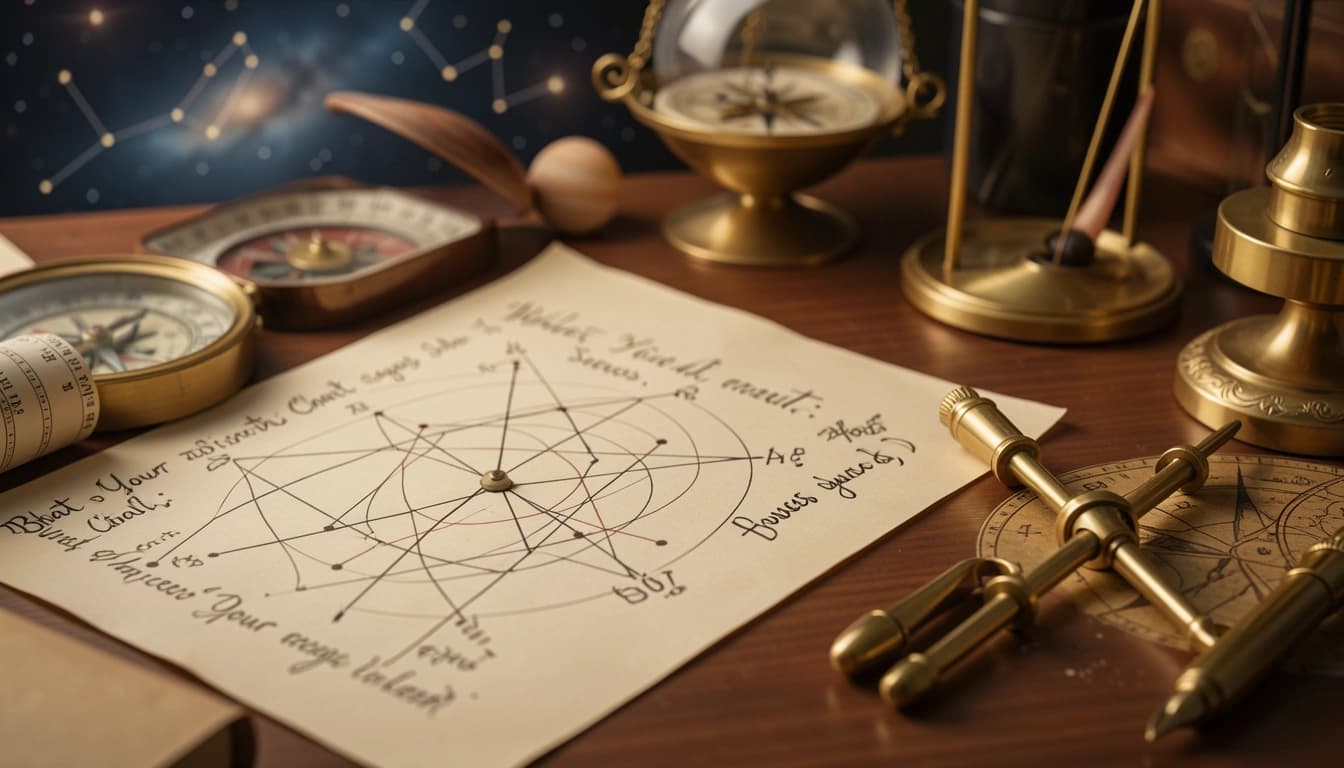
The calculator then casts a new chart for that precise time and your current location. It identifies the Ascendant, house placements, and aspects for the upcoming lunar month. Most online tools display the chart in a wheel format, with a list of key planetary positions and aspect lines.
No manual ephemeris flipping required. Just input your data, and the calculator generates a personalized report that you can interpret on your own or with the guidance of this article. The accuracy depends heavily on having a correct birth time — even a few minutes off can shift the Moon's position enough to change the house placement and the entire feel of the month.

Generate Your Free Lunar Return Chart
Ready to pull your chart? Use the Free Lunar Return Chart Calculator below. Enter your birth details — date, time, and place — then click Calculate. The tool will return a complete Lunar Return chart for your next upcoming return, with the Moon's position, house cusps, and aspect table.
For best results, make sure your birth time is as accurate as possible. If you don't know it, you can try using 12:00 PM noon — but keep in mind that the Moon moves about 0.5 degrees per hour, so the house placements might be off. The calculator will also show the exact date and time of your next Lunar Return so you can mark your calendar.
Once generated, you can either view the chart directly on screen or download it as a PDF. Some calculators also allow you to compare multiple future returns to see how the lunar themes evolve over the coming months. Experiment with different locations — if you're traveling, your Lunar Return chart changes because the house system shifts with your current location.
When Is Your Next Lunar Return?
Your next Lunar Return happens when the transiting Moon reaches the exact zodiac degree and minute of your natal Moon. Since the Moon orbits Earth every 27.3 days, you can expect a return roughly once a month — but the exact interval varies because the Moon's speed isn't constant and because the return point itself drifts slightly over time due to precession.
To find your next one, the calculator compares your natal Moon position against the Moon's daily motion. It pinpoints the moment the two align, and that's your return moment. You might notice that your Lunar Return sometimes falls on a different weekday or even a different phase of the Moon than your previous one — that's normal. Over the years, your Lunar Return Moon can move through all twelve signs, each bringing a distinct emotional climate.
If you're curious about future returns, many calculators allow you to generate a list of all Lunar Returns for the next 12 months. That way you can see the entire emotional calendar ahead and plan accordingly.

How to Read Your Lunar Return Chart
Reading a Lunar Return chart follows the same logic as reading any astrological chart, but the focus is narrower. Here's a step-by-step approach:
1. Start with the Moon. Its sign, house, and aspects are the headline for the month. The Moon's sign tells you the general emotional tone — for example, a Lunar Return Moon in Pisces suggests a dreamy, intuitive month, while one in Aries points to a more impulsive, action-oriented period.
2. Look at the Ascendant. The Lunar Return Ascendant sets the scene — the area of life that will feel most immediate and personal. If the Ascendant falls in your 10th house, career matters might dominate the month. If it's in the 4th, home and family take center stage.
3. Check the house placements of the other planets. Each planet activates a different sphere. Venus in the 7th house could mean relationship highlights; Mars in the 6th might bring conflict at work or health issues. The aspects between them create the plot twists — squares, trines, and oppositions that add texture.
4. Note any planets near the angles (Ascendant, MC, Descendant, IC). These act like spotlights. A planet conjunct the Ascendant colors your entire demeanor for the month.
Don't try to interpret everything at once. Start with the Moon and one or two strong aspects, and let the story build as you live through the month.
What Does the Lunar Return Moon Reveal?
The Moon in your Lunar Return chart is the star of the show. It reveals the emotional weather for the next 27 days — how you're likely to feel, what you crave, and where you're most vulnerable. Unlike your natal Moon, which represents your lifelong emotional nature, the Lunar Return Moon shows a temporary emotional filter.
If your Lunar Return Moon is in Cancer, you'll be more nurturing, home-focused, and sensitive to family dynamics. In Capricorn, you might feel emotionally reserved, driven by responsibility, or craving structure. In Leo, the month asks you to express yourself and seek recognition — but watch out for drama if things don't go your way.
The house placement pinpoints the area of life where these emotions play out. A Lunar Return Moon in the 2nd house could stir up financial anxieties or a desire to spend on comfort. In the 11th house, friendships and group affiliations become emotionally charged. Aspects to the Moon — especially from Saturn, Uranus, or Pluto — add intensity, revealing deeper psychological undercurrents.

Lunar Return Houses and Monthly Life Themes
Each house in your Lunar Return chart rules a specific domain of life for that month. Together, they form a map of where your energy and attention will flow. Unlike your birth chart houses, which are fixed, Lunar Return houses shift every month because the Ascendant moves.
For example, if your Lunar Return 1st house is packed with planets, the month is about you — your appearance, self-image, and personal projects. A strong 7th house points to relationships, partnerships, and one-on-one interactions. The 4th house highlights home, family, and emotional security.
Don't ignore the empty houses. They're not voids — they simply indicate areas that won't demand your attention this month. The ruler of each empty house (the planet that rules the sign on its cusp) still plays a role if it's aspected elsewhere. And remember: the house of the Moon is always the emotional epicenter, regardless of how many planets are in other houses.
The interceptions and duplications (unequal house systems can cause signs to be skipped or repeated) also offer nuance. If a sign is intercepted in your Lunar Return, its themes operate more subtly, often through subconscious processes.
The Lunar Return Ascendant Explained
The Ascendant in your Lunar Return chart acts like the front door of the month. It's the mask you wear, the first impression you make, and the filter through which you approach the world during those 27 days. If your natal Ascendant is Leo but your Lunar Return Ascendant is Virgo, you'll find yourself acting more analytical and detail-oriented than usual — even your walk and posture might change slightly.
The sign on the Ascendant sets the initial energy. A Libra Ascendant in a Lunar Return makes you seek harmony and partnership; you might compromise more easily. A Scorpio Ascendant brings intensity, a need for control, and a tendency to probe beneath the surface. The degree of the Ascendant also matters — if it's early, the theme is fresh and new; if late, the month feels like a conclusion or culmination.
Planets conjunct the Ascendant are especially potent. They merge with the Ascendant's expression. For instance, Mars conjunct the Lunar Return Ascendant could make you unusually assertive or confrontational — great for launching a project, but tricky for delicate conversations.
For further reading, you can also explore Lunar Return Chart Premium Analysis Report.

Planets and Aspects in Your Lunar Return
Every planet in your Lunar Return chart adds a subplot to the month's story. The Sun, Mercury, Venus, Mars, Jupiter, Saturn, Uranus, Neptune, and Pluto — each one activates a particular function, and their interactions (aspects) create the plot twists.
Sun: Your vitality and core identity for the month. A Sun in the 5th house could bring a creative surge. Mercury: How you think and communicate. If Mercury is retrograde in the return, expect more mental review than forward motion. Venus: What you value and who you attract. Mars: Where you assert yourself — and where you might clash. Jupiter: Expansion and luck. Saturn: Lessons, limits, and structure. Uranus, Neptune, Pluto: Disruption, illusion, and deep transformation.
Aspects bring the planets into dialogue. A trine between Venus and Jupiter suggests a smooth, generous month for relationships. A square between Mars and Saturn points to frustration or blocked action — you'll need patience and discipline. An opposition between the Moon and Pluto can unearth deep emotional power struggles. Pay attention to orbs — typically 5–8 degrees for major aspects, 2–3 for minor — and consider applying vs. separating aspects for timing clues.
Lunar Return Transits and Emotional Patterns
Your Lunar Return chart is itself a transit chart — it shows where the planets are in the sky relative to your birth chart at the return moment. But beyond that, the transits that occur during the lunar month overlay on top of the Lunar Return chart, creating a dynamic interplay.
Think of the Lunar Return as the stage setting, and the daily transits as the actors walking on and off. For example, if your Lunar Return Moon is in the 7th house but transiting Mars crosses your Ascendant mid-month, that's when a relationship conflict might erupt. The key is to watch for transits to the Lunar Return planets themselves — especially when a slower planet like Jupiter or Saturn aspects your Lunar Return Moon or Ascendant.
Recurring emotional patterns can become visible when you track several Lunar Returns in a row. You might notice that every time your Lunar Return Moon is in an earth sign, you feel more grounded and productive. Or that returns with a challenging Pluto aspect always coincide with a personal crisis that ultimately transforms you. Keeping a journal alongside your Lunar Return charts helps you see the patterns your conscious mind might miss.

Lunar Return for Love, Career and Personal Growth
Your Lunar Return isn't just about feelings — it's a practical roadmap for every major life domain. By looking at specific houses and planets, you can tailor the month's energy to your goals.
For Love: Check the 5th house (romance, dating) and 7th house (committed partnership). Venus or Mars in these houses signal relationship activity. If the Moon is in the 7th, emotions will revolve around your partner — good for deepening intimacy, but beware of projection. Aspects to Venus from Saturn may mean a sobering conversation about commitment, while aspects from Jupiter could bring a whirlwind romance.
For Career: Look at the 10th house (career, reputation), 6th house (daily work), and 2nd house (income). A strong Saturn in the 10th suggests hard work pays off but requires discipline. Jupiter in the 6th could mean a promotion or a new job offer. The Moon in the 10th puts your emotional energy into professional ambitions — just watch for burnout if you overextend.
For Personal Growth: The 9th house (higher learning, travel), 12th house (spirituality, solitude), and 1st house (self-development) hold the keys. A Lunar Return with Neptune in the 12th is ideal for meditation, therapy, or creative daydreaming. The 1st house Moon asks you to focus on self-care and personal boundaries. Use the aspects to guide your growth work — for example, a trine from Chiron might heal an old wound, while a square from Pluto demands you face a shadow.
How Long Does a Lunar Return Influence You?
A Lunar Return influences you for roughly 27 days — from one return moment to the next. But the energy doesn't switch on and off like a lightbulb. It builds gradually in the days before the exact return (the pre-lunar period) and fades as the next return approaches. Some astrologers consider the chart active starting about three days before the exact time and lasting until the following Lunar Return.
The intensity is highest when the transiting Moon is close to your Lunar Return Moon, especially within 3–5 degrees orb. That's typically the middle of the lunar month, around 13–14 days after the return. During the final week, the themes wind down and you start preparing for the next cycle.
External factors can also modulate the influence. If you experience a major life event — a move, a job change, a relationship shift — the Lunar Return themes might be overridden by the sheer force of the event transits. But for most of us, the Lunar Return provides a consistent emotional undercurrent that subtly colors every day.

Lunar Return vs. Natal Chart
Your natal chart is the blueprint of your soul — it describes your inherent nature, lifelong strengths, and core challenges. The Lunar Return, by contrast, is a temporary overlay. It doesn't change your natal chart; it just tells you what part of your blueprint is being activated this month.
Think of it this way: your natal Moon is the permanent ocean of your emotions, while the Lunar Return Moon is a monthly weather system moving across that ocean. A person with a natal Moon in Cancer will always have deep emotional sensitivity, but a Lunar Return Moon in Capricorn might make them feel unusually stoic and businesslike for a few weeks. That doesn't mean they've changed who they are — it just means the climate is different.
When interpreting, always start with the natal promise. If your natal Moon is in hard aspect to Saturn, your Lunar Returns that trigger that aspect (by bringing Saturn to the natal Moon, for example) will be particularly significant. The Lunar Return chart highlights, amplifies, or challenges specific pieces of your natal DNA. It doesn't rewrite them.
Lunar Return vs. Solar Return Chart
Both Lunar and Solar Returns are time-based astrological tools, but they operate on very different scales. Your Solar Return happens once a year when the Sun returns to your natal Sun position. It sets the overarching themes for the entire year — the major chapters of your life story. Your Lunar Return, happening 12–13 times a year, zooms in on the individual scenes and emotional beats within those chapters.
The Solar Return is broad and external: career shifts, major moves, relationship milestones. The Lunar Return is internal and cyclical: mood patterns, intuition, daily rhythms, unconscious needs. A difficult Solar Return might signal a year of obstacles, but a series of positive Lunar Returns can make that year feel manageable. Conversely, a lovely Solar Return can feel underwhelming if your Lunar Returns are consistently challenging.
Many astrologers use the two together: they interpret the Solar Return as the annual container, then examine each Lunar Return to see how the year unfolds month by month. When a Lunar Return strongly echoes the Solar Return (for example, both have the Sun in the 10th house), that month becomes a focal point for the year's career theme.
For further reading, you can also explore Electional Astrology Calculator.