On this page
The Free Birth Chart Houses Calculator is your gateway to understanding how the sky was divided at the moment of your birth. While your Sun sign gets the headlines, the twelve houses reveal where the action happens in your life. Each house corresponds to a specific life area: identity, money, communication, home, creativity, work, relationships, transformation, philosophy, career, community, and spirituality. By entering your birth details, this calculator instantly maps the house cusps, the zodiac signs on each house, and any planets residing there.
Why does this matter? Two people born on the same day but at different times can have completely different house placements. The houses shift roughly every two hours, so your exact birth time is essential. The calculator uses your birth date, time, and location to compute the precise degree of each house cusp, then overlays the planets from your natal chart. The result is a personalized blueprint that shows which areas of life are emphasized, challenged, or gifted.
This guide will walk you through what each house represents, how to read your house cusps, what it means to have planets in certain houses, and how different house systems affect your chart. Whether you are a beginner or a seasoned astrologer, the Free Birth Chart Houses Calculator gives you the raw data you need for deeper self-understanding. For a more detailed analysis, you can also explore the Birth Chart Houses Premium Analysis Report.
What Are the Houses in a Birth Chart?
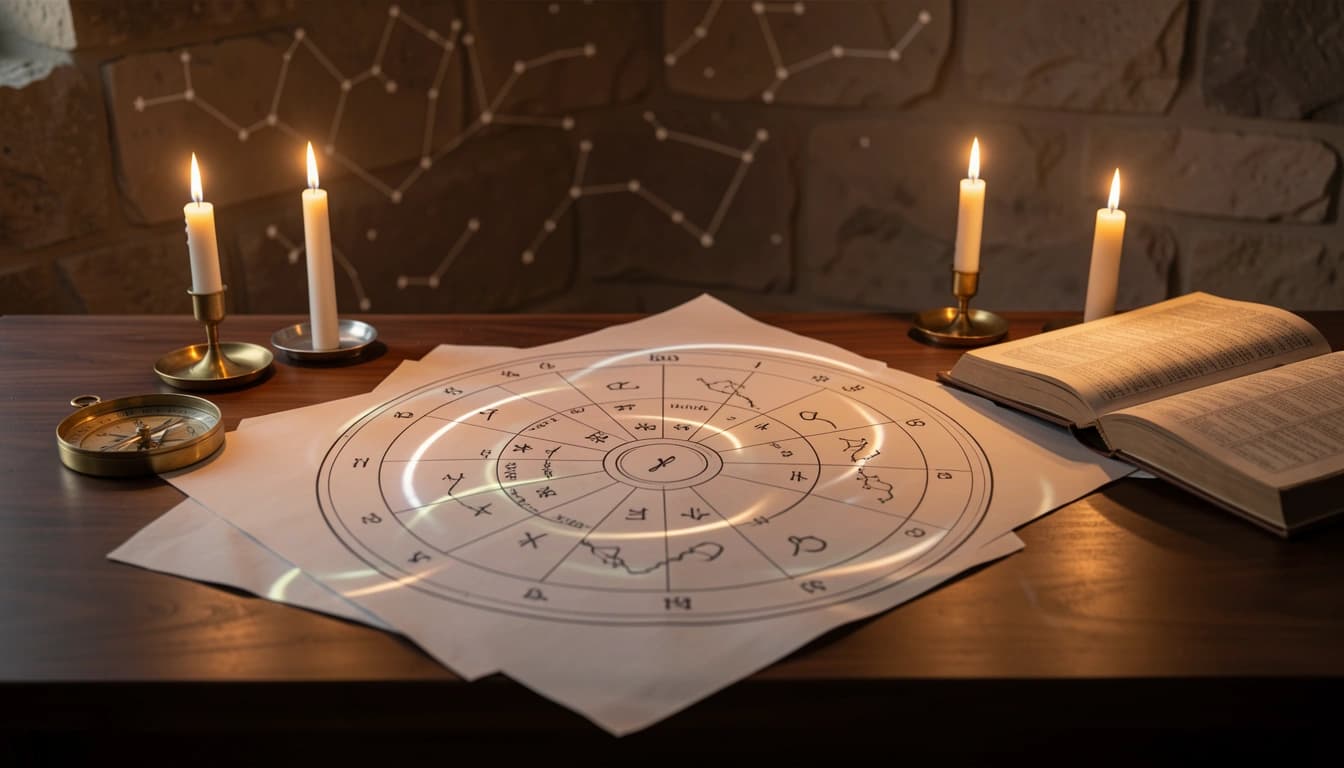
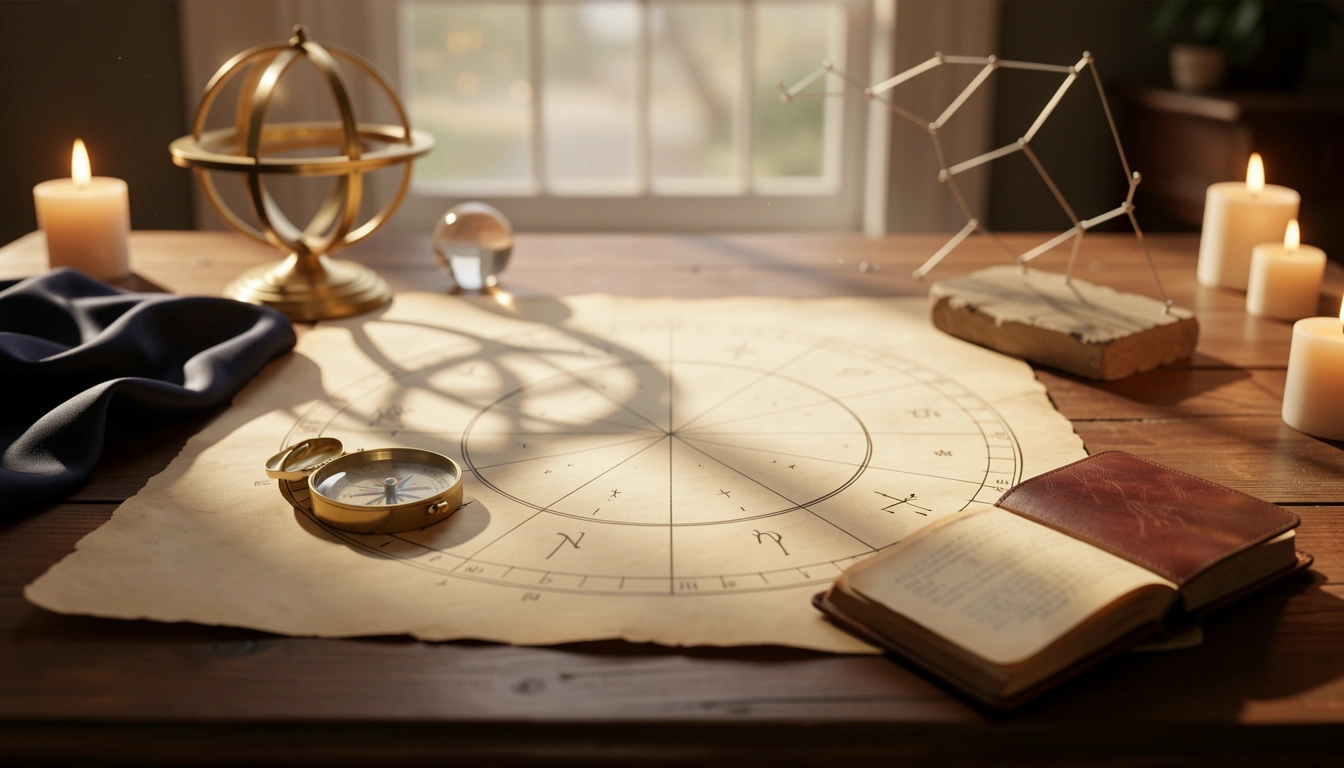
The houses are twelve divisions of the ecliptic plane as seen from your birthplace at the moment of birth. Unlike the zodiac signs, which are fixed bands of the sky, houses are Earth-centered. They represent the wheel of life, with each house governing a specific domain. The First House starts at the Ascendant, the eastern horizon at your birth time, and the houses continue counterclockwise around the chart.
Think of the houses as the stage, the planets as actors, and the signs as the costumes they wear. The house tells you where in your life a planet's energy expresses itself. For example, Venus in the Seventh House points to relationships as a key area for love and harmony, while Venus in the Tenth House suggests a career tied to beauty or diplomacy.
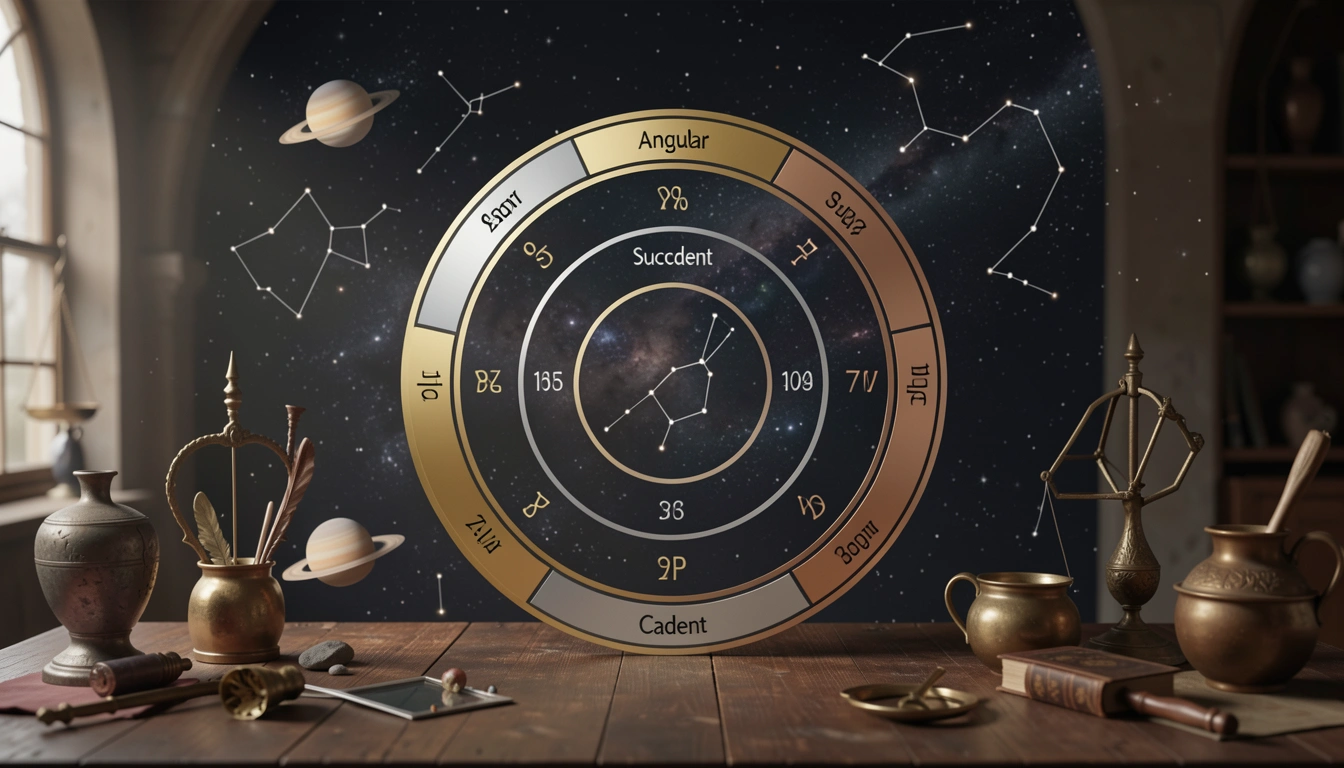
The houses are grouped into three categories: angular (1st, 4th, 7th, 10th), succedent (2nd, 5th, 8th, 11th), and cadent (3rd, 6th, 9th, 12th). Angular houses are the most dynamic and action-oriented; succedent houses deal with stability and resources; cadent houses are about learning, communication, and preparation. Understanding this framework helps you prioritize which house placements may be most influential in your chart.
The Wheel of Life: How Houses Map Your Experience
Each house covers a specific life area in a natural progression. The First House is the self and appearance; the Second House is money and values; the Third House is communication and siblings; the Fourth House is home and family; the Fifth House is creativity and romance; the Sixth House is health and daily work; the Seventh House is partnerships; the Eighth House is transformation and shared resources; the Ninth House is philosophy and travel; the Tenth House is career and reputation; the Eleventh House is friendships and goals; the Twelfth House is spirituality and the unconscious.
This sequence follows the soul's journey from individual identity to collective consciousness. When you use the Free Birth Chart Houses Calculator, you see exactly which signs occupy each house in your chart, giving you a personalized map of your life priorities.
How Does a Birth Chart Houses Calculator Work?
The calculator uses your birth date, exact time, and geographic coordinates to compute the positions of the twelve house cusps. It first calculates the Ascendant (the degree of the zodiac rising on the eastern horizon) and the Midheaven (the degree at the top of the chart). From these two points, the other house cusps are derived using a mathematical house system, most commonly Placidus.
Behind the scenes, the calculator performs spherical trigonometry to divide the local sky into twelve unequal segments. The size of each house depends on your birth latitude and the time of year. For example, someone born in northern latitudes may have very large houses (intercepted signs) while someone near the equator gets more equal houses. The result is a precise list of degrees for each cusp, along with the zodiac sign ruling that house.
Once the house cusps are set, the calculator overlays the planetary positions from your natal chart. Each planet falls into a specific house based on its degree. The final output shows you which planets are in which houses, plus any aspects they make to the cusps. This is the raw material for interpretation. For a deeper dive into how planets interact across houses, try the Free Birth Chart Aspects Calculator.

Calculate Your Birth Chart Houses Online
Using the Free Birth Chart Houses Calculator is straightforward. Enter your birth date, exact time (as precise as possible), and birthplace. The calculator instantly generates your twelve house cusps, the signs on each house, and any planets located in each house. You do not need to know your Ascendant beforehand; the calculator computes everything for you.
If you are unsure of your birth time, the calculator will still work but the house placements will be approximate. A difference of even four minutes can shift a house cusp by one degree, potentially moving a planet into a different house. For the most accurate results, use the exact time from your birth certificate. If you do not have a birth time, consider using the Free Birth Chart Calculator Without Accurate Time for a symbolic reading.
The online tool is free and requires no registration. You can run it as many times as you like for different people or different dates. The output is presented in a clear table showing house number, cusp degree, sign, and any planets. This makes it easy to copy or screenshot for your records.
What You Need for Accurate Results
- Birth date – day, month, and year.
- Exact birth time – hour and minute, including AM/PM or 24-hour format. Time zone matters.
- Birthplace – city and country (or latitude/longitude).
Without a precise birth time, house cusps can be off by several degrees, and planets near cusps may appear in the wrong house. Always use the most reliable source available.
How to Find Your 12 Astrology Houses
Your twelve astrology houses are determined by your birth time and location. The Ascendant (or rising sign) marks the cusp of the First House. From there, the houses are numbered counterclockwise. The Fourth House cusp is the Imum Coeli (IC), the lowest point in the chart; the Seventh House cusp is the Descendant; and the Tenth House cusp is the Midheaven (MC). These four angles are the most important cusps.
To find your houses, you need a calculated chart. The Free Birth Chart Houses Calculator does this for you. Once you have your chart, look at the outer ring: each house is usually marked by a number (1 through 12) near the cusp line. The sign listed next to that number is the sign on the house cusp. For example, if your First House cusp is at 15 degrees Aries, then Aries rules your First House.
If a house contains a planet symbol, that planet is located in that house. For instance, Mars in the Tenth House suggests a career driven by ambition and initiative. The house position of each planet is just as important as its sign and aspects. Learning to read this layout is the first step in house interpretation.

How to Read the Houses in Your Birth Chart
Reading the houses involves three layers: the sign on the house cusp, any planets inside the house, and the ruler of that house (the planet that rules the sign on the cusp). Start by noting the sign on each house cusp. That sign's energy colors the life area of that house. For example, if your Second House (money) has Gemini on the cusp, you may earn income through communication, writing, or multiple streams.
Next, look for planets inside the house. A planet in a house amplifies that area. If Jupiter is in your Second House, you may experience financial growth or generosity with resources. If Saturn is there, you might face financial discipline or delays. Also note if the planet is in its own sign (domicile) or in detriment, as that modifies the expression.
Finally, find the ruler of the house by identifying the planet that rules the sign on the cusp. That ruler's placement by sign and house tells you where the energy of this house flows. For instance, if your Seventh House (relationships) has Libra on the cusp, Venus rules that house. If Venus is in your Tenth House, your partnerships may be linked to your career or public image. This chain of rulership creates a web of meaning across your chart.
A Step-by-Step House Reading Framework
- Note the sign on each house cusp.
- Check for planets in that house.
- Identify the ruling planet of the sign on the cusp.
- See where that ruling planet is placed (sign and house).
- Interpret how the house area is expressed through the sign, any planets, and the ruler's placement.
This method works for all twelve houses. Practice with a few houses in your own chart to build fluency.
What Does Each Birth Chart House Represent?
The twelve houses cover every major life area. Here is a quick reference:
| House | Life Area | Keywords |
|---|---|---|
| 1st | Self, appearance, identity | Personality, body, first impressions |
| 2nd | Money, values, possessions | Income, self-worth, material security |
| 3rd | Communication, siblings, local travel | Mind, writing, short trips |
| 4th | Home, family, roots | Childhood, private life, emotional foundation |
| 5th | Creativity, romance, children | Self-expression, fun, hobbies |
| 6th | Health, daily work, service | Routines, wellness, coworkers |
| 7th | Partnerships, marriage, open enemies | Relationships, contracts, collaboration |
| 8th | Transformation, shared resources, intimacy | Death and rebirth, taxes, sexuality |
| 9th | Philosophy, travel, higher education | Beliefs, long journeys, legal matters |
| 10th | Career, reputation, public life | Ambition, achievements, authority |
| 11th | Friendships, goals, networks | Community, hopes, social causes |
| 12th | Spirituality, subconscious, isolation | Dreams, karma, hidden strengths |
Each house also has a natural zodiac sign association (Aries with 1st, Taurus with 2nd, etc.), but your actual chart may place different signs on each house. The calculator shows you the real signs, not the natural ones.
Planets in the Houses and Their Meaning
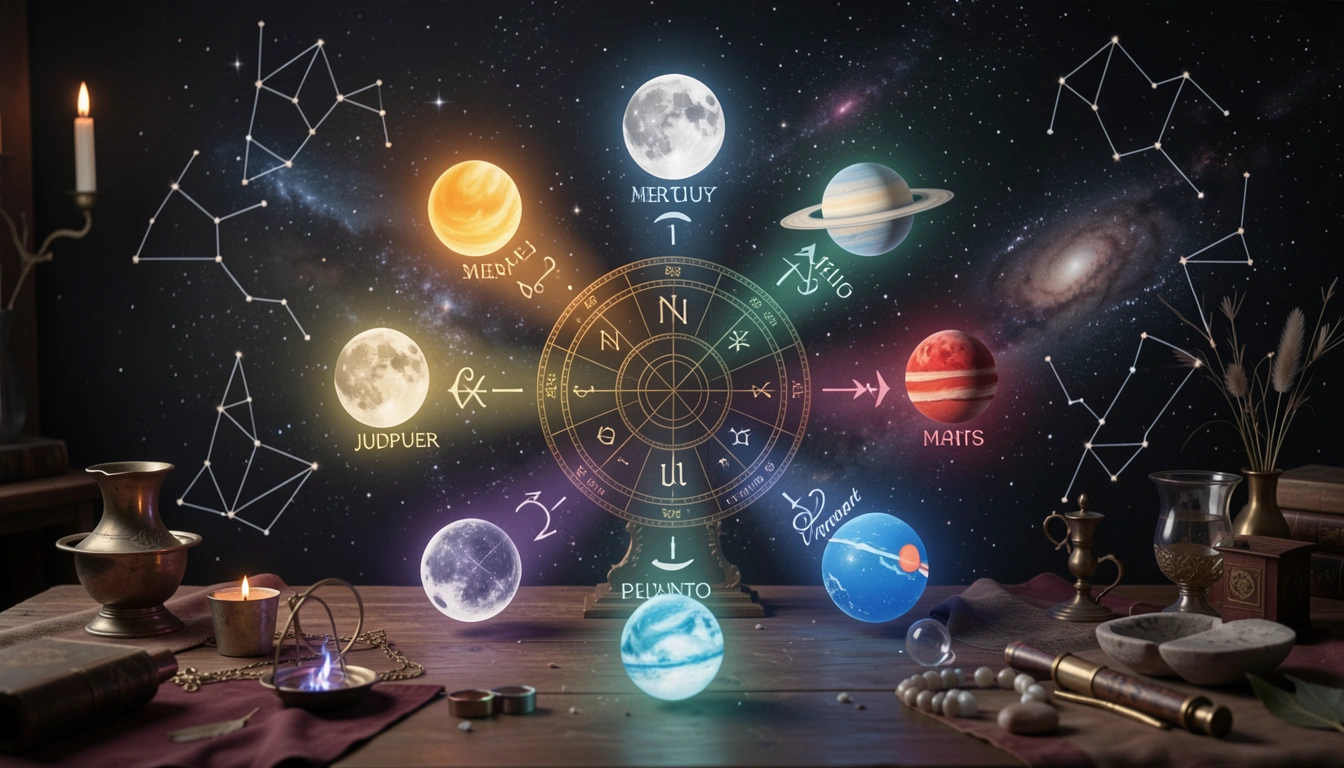
When a planet occupies a house, it brings that planet's energy directly into that life area. For example, the Sun in the Tenth House puts your identity and vitality into your career; you may be known for your leadership or creative work. The Moon in the Fourth House ties your emotions to home and family; you may be deeply nurturing or sensitive about your private space.
Mercury in the Third House strengthens communication skills; you think and speak quickly. Venus in the Seventh House favors harmonious relationships; you attract partners easily. Mars in the First House gives a strong, assertive personality; you may come across as competitive or energetic. Jupiter in the Ninth House expands your philosophical horizons; you love travel and learning. Saturn in the Sixth House brings discipline to health and work; you may struggle with chronic conditions but build resilience.
Outer planets (Uranus, Neptune, Pluto) in houses indicate generational themes combined with personal expression. Uranus in the Fourth House may mean an unconventional family background or sudden moves. Neptune in the Twelfth House heightens spiritual sensitivity but can also bring confusion. Pluto in the Eighth House intensifies transformation and power dynamics around shared resources. The Free Birth Chart Houses Calculator shows you exactly which planets fall in each house for your chart.
How to Interpret a Planet in a House: A Quick Guide
- Sun – identity, ego, life purpose.
- Moon – emotions, habits, nurturing.
- Mercury – communication, intellect, travel.
- Venus – love, values, aesthetics.
- Mars – action, desire, aggression.
- Jupiter – expansion, luck, wisdom.
- Saturn – discipline, restriction, maturity.
- Uranus – innovation, rebellion, sudden change.
- Neptune – dreams, illusion, spirituality.
- Pluto – transformation, power, depth.
Combine the planet's nature with the house topic. For example, Mercury in the 12th House may indicate a private thinker or a gift for psychic communication.
House Cusps and Zodiac Signs Explained
A house cusp is the starting point of a house, usually the exact degree of the zodiac where the house begins. The sign on that cusp is said to rule the house. For instance, if your Third House cusp is at 10 degrees Gemini, then Gemini rules your Third House, and Mercury (ruler of Gemini) becomes the lord of that house. The cusp degree is also sensitive: planets or points within a few degrees of a cusp are considered to be in the 'orb' of that cusp and may blend the energy of both houses.
Some houses may have the same sign on both cusps, which means that sign is intercepted in the previous house. Interception occurs when a sign does not appear on any cusp, indicating that the energy of that sign is expressed internally or repressed. The calculator handles these complexities automatically, showing you the exact cusp degrees and any interceptions.
The sign on a house cusp colors the entire house. For example, Aries on the Fourth House cusp suggests a dynamic, possibly confrontational home environment, while Pisces on the Fourth House cusp indicates a dreamy, artistic, or chaotic family life. The cusp sign is the lens through which the house's life area is experienced.
Angular, Succedent and Cadent Houses
The houses are grouped into three modes that describe their quality and function. Angular houses (1st, 4th, 7th, 10th) are the most powerful. They correspond to the four cardinal points of the chart: Ascendant, IC, Descendant, MC. Planets in angular houses are highly visible and act as driving forces in your life. For example, a planet in the 10th House shapes your career and public image.
Succedent houses (2nd, 5th, 8th, 11th) follow the angular houses. They represent stability, resources, and consolidation. Planets here are less overt but provide support and substance. The 2nd House deals with money and values, the 5th with creativity, the 8th with shared resources, and the 11th with social networks.
Cadent houses (3rd, 6th, 9th, 12th) are the most mutable. They are associated with learning, communication, and preparation. Planets in cadent houses may be more internal or intellectual. The 3rd House is about thinking and local connections, the 6th about service and health, the 9th about higher learning, and the 12th about spirituality and the subconscious. Understanding this triplicity helps you gauge how strongly a house placement will manifest in your life.
Why Angular Houses Matter More
Angular houses are considered the most potent because they align with the four angles of the chart. A planet in an angular house is often a key part of your personality and life path. For example, if you have Jupiter in the 1st House, you project optimism and luck. If Saturn is in the 7th House, relationships may feel serious or karmic. The Free Birth Chart Houses Calculator highlights which of your planets are in angular houses, giving you insight into your most active life areas.
Empty Houses in a Birth Chart Explained
An empty house is simply a house that contains no planets in your birth chart. This is normal and common; most people have several empty houses. An empty house does not mean that area of life is unimportant. Instead, it suggests that the energy of that house is expressed through the sign on its cusp and the ruler of that house, rather than through a planet directly.
For example, if your 7th House is empty but has Libra on the cusp, you still have relationship dynamics. You would look to Venus (ruler of Libra) and its placement by sign and house to understand how you approach partnerships. The empty house area may feel less eventful or more natural, without the tension that a planet can bring.
However, if a house is empty and its ruler is also poorly placed, that life area may require more conscious effort. For instance, an empty 2nd House with its ruler in a difficult aspect could indicate financial challenges that you need to work through. The Free Birth Chart Houses Calculator shows all houses, empty or not, so you can see the full picture.

Different House Systems in Astrology
Astrologers use various mathematical systems to divide the sky into houses. The most common is Placidus, which is time-based and produces unequal house sizes. It works well for most birth locations but breaks down near the Arctic Circle. Whole Sign Houses is an ancient system where each house equals 30 degrees and starts at the same degree as the Ascendant sign. It is simple and popular in Hellenistic astrology.
Equal House system divides the ecliptic into twelve 30-degree houses starting from the Ascendant. Koch and Regiomontanus are other time-based systems that handle high latitudes differently. Topocentric uses a three-dimensional model of the local sky. Each system produces slightly different house cusps, which can change which sign rules a house and where planets fall.
The Free Birth Chart Houses Calculator defaults to Placidus, but you can often select other systems in advanced settings. If you are new to astrology, start with Placidus. If you study traditional or Vedic astrology, you may prefer Whole Sign or Equal. The differences matter most for planets near house cusps; a planet could shift houses entirely between systems.
Which House System Should You Use?
- Placidus – most widely used in modern Western astrology.
- Whole Sign – preferred by traditional and Hellenistic astrologers.
- Equal House – simple and works well for birth time unknowns.
- Koch – popular in German astrology and for high latitudes.
- Regiomontanus – used in Renaissance astrology.
Try the same chart in different systems and compare. The house positions that change are the ones most sensitive to your birth time accuracy.
Placidus vs. Whole Sign Houses
The debate between Placidus and Whole Sign houses is one of the longest in astrology. Placidus, developed by the 17th-century astrologer Placidus de Titis, divides time from the Ascendant to the MC into unequal segments. It produces houses that vary in size depending on your latitude. At the equator, houses are nearly equal; at high latitudes, some houses can be 40 degrees or more, causing interceptions.
Whole Sign houses, by contrast, assign each sign to exactly one house. The Ascendant determines the first house sign, and the following signs occupy the next houses in order. This system never produces interceptions and is easier to read. It was the dominant system in Hellenistic astrology and is experiencing a revival.
Which one is more accurate? It depends on your philosophical approach. Placidus is better for modern psychological astrology and for charts where birth time is precise. Whole Sign is favored for traditional predictive techniques like annual profections and zodiacal releasing. Many astrologers use both: Whole Sign for house rulerships and Placidus for cusp-sensitive points. The Free Birth Chart Houses Calculator can support both systems; you can generate the same chart in each and compare.

How Your Birth Time Affects House Calculations
Your birth time is the single most critical factor for accurate house calculations. The Ascendant moves about one degree every four minutes, and the MC moves roughly the same rate. A difference of four minutes can shift a house cusp by one degree, potentially moving a planet from one house to another, especially if it is near a cusp. For example, a planet at 29 degrees of a sign could be in the 12th House with one birth time and in the 1st House with a time just four minutes later.
If your birth time is off by 30 minutes, your house cusps could be off by 7-8 degrees, which can change the sign on several house cusps. This is why astrologers insist on the most precise birth time available. If you only have an approximate time (e.g., 'morning' or 'around 2 PM'), the house placements are uncertain, especially for the 1st, 4th, 7th, and 10th houses.
If you do not know your birth time at all, some calculators offer a 'sunrise chart' or 'noon chart' as a default, but the houses will not be accurate for you. In that case, consider using the Free Birth Time Rectification Calculator to estimate your time based on life events. Alternatively, focus on sign-based house systems like Whole Sign, which rely less on exact time.
Birth Chart Houses and Major Life Areas
Your birth chart houses directly map to the major areas of your life. The First House covers your identity and physical body. The Second House covers your finances and self-worth. The Third House covers your mind and immediate environment. The Fourth House covers your home and emotional foundation. The Fifth House covers your creativity and romantic expression. The Sixth House covers your health and daily routines.
The Seventh House covers your one-on-one relationships. The Eighth House covers shared resources, intimacy, and transformation. The Ninth House covers higher learning, travel, and philosophy. The Tenth House covers your career and public reputation. The Eleventh House covers your friendships and long-term goals. The Twelfth House covers your spirituality, dreams, and hidden strengths.
When you use the Free Birth Chart Houses Calculator, you see not only which signs and planets occupy these houses but also the interconnections. For example, if your 10th House ruler is in the 4th House, your career may be linked to your family or home. If your 7th House ruler is in the 11th House, you may meet your partner through friends or social networks. These rulership chains reveal the deeper narrative of your life.
For a comprehensive interpretation that ties all these threads together, consider the Birth Chart Houses Premium Analysis Report, which provides a detailed breakdown of each house and its planetary influences.